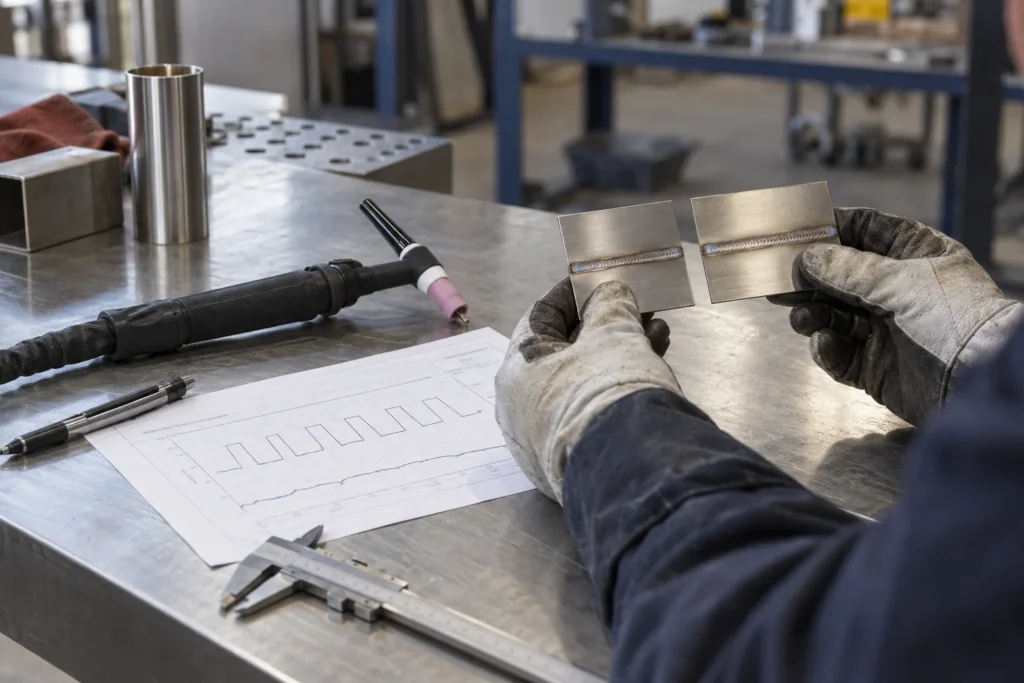
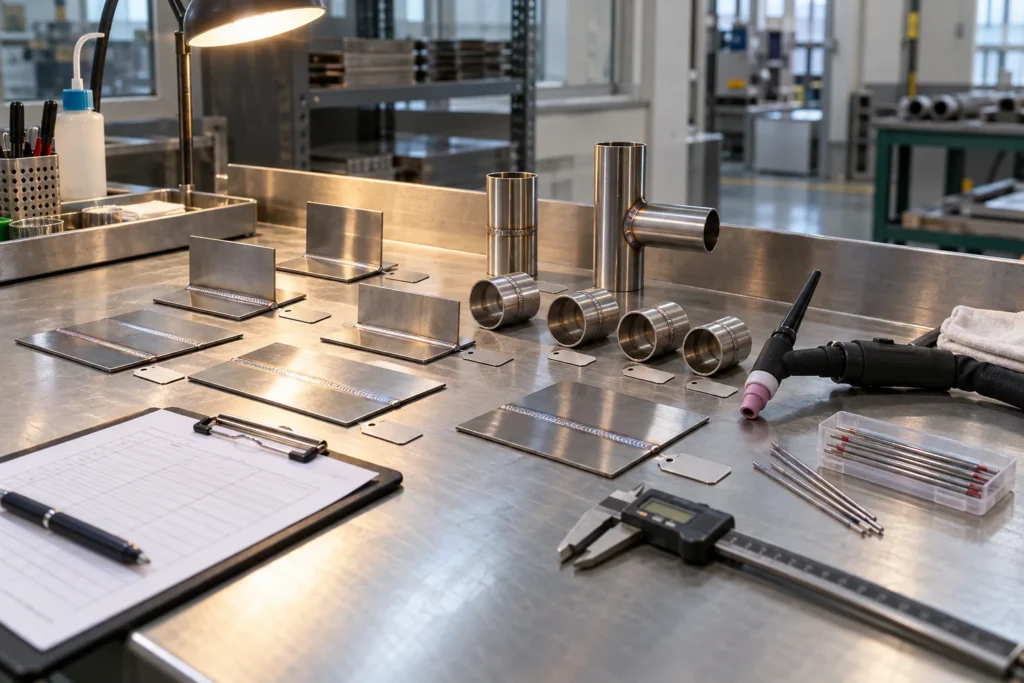
ODM TIG Welding Machine Manufacturer: Project Guide
Introduction
An ODM TIG welding machine manufacturer helps turn a market requirement into a defined welding product, with agreed design work, prototypes and production-release evidence. The buyer should establish which parts of the design are new, which come from an existing platform, and what each party must deliver before approving development spending.
This guide focuses on planning that development project. It covers product requirements, platform gaps, interface decisions, design files, validation stages, tooling, changes and quotation scope. Use it when a brand needs more than a logo on an existing machine. For general supplier selection, start with the broader sourcing guide linked below.
When Does ODM Make More Sense Than Private Label?
Choose an ODM TIG welder project when the manufacturer must contribute meaningful product design or engineering beyond standard configuration. If the requirement is limited to artwork, colors and packaging on an existing model, a private-label order may be sufficient. Define the actual work rather than relying on a supplier's label for the relationship.
Separate the commercial names from the work
In this guide, private label means supplying an existing platform with agreed brand presentation. OEM describes work against buyer-defined requirements or designs. ODM involves supplier design input. Real projects can combine these arrangements, so the quotation needs an itemized scope instead of treating the terms as interchangeable guarantees.
A new front-panel layout may require only a mechanical and artwork change. A different control sequence, cooler interlock or remote interface can involve software, electrical design and renewed testing. Ask the supplier to explain those dependencies before agreeing to a customization price.
Do not commission development that the market does not need
Write the customer problem and the expected sales channel first. Compare a standard platform, a configured platform and a new design against that need. Use the OEM and wholesale sourcing framework for partner qualification, then use this article to define the engineering project itself.
Define the Welding Product Before Defining Its Appearance
A custom TIG welding machine needs a product brief that describes its users, applications, electrical supply and operating limits. An enclosure sketch cannot answer those questions. Establish the required process and performance envelope first, because these choices influence the power platform, cooling, interfaces, size and development effort.
Build a measurable requirement list
-
- Target users, destination markets and expected installation conditions.
- Material families, thickness range, joint types and representative production tasks.
- Input voltage, phase and frequency, separately from AC or DC welding output.
- Required current range, relevant duty-cycle operating points and cooling arrangement.
- Starting method, pulse controls, remote operation and accessory connections.
- Documentation languages, service model and planned order quantities.
Assign each requirement an identifier, a priority and a verification method. Replace words such as professional or high quality with observable conditions. If an important input is unknown, keep it in an open-question list with an owner rather than allowing a provisional assumption to become the final specification.
Agree what the project will not provide
List exclusions, such as automated wire feeding, a robot interface or a particular enclosure protection level, unless they are explicitly included. This prevents a display option or remote socket from being interpreted as a complete automation capability. Require the supplier to identify every deviation from the brief.
Map Existing Platform Functions to New Development Work
A platform-gap review shows which requirements an existing design already meets and which need engineering changes. This is the starting point for a credible ODM quotation. Record each gap, its proposed solution, its dependencies and the evidence required to close it. Do not assume that a familiar model name proves compatibility.
Use a standard, option or development classification
Classify each function as standard, available option, engineering development or not supported. Ask the manufacturer to name the exact platform and input variant. Keep accessories in the same review, including torch connections, pedal behavior, cooling interfaces and work leads. A change to one component can affect the complete delivered package.
For example, a distributor may want familiar pulse controls plus a revised menu and a different trigger sequence. The platform review should separate existing pulse capability from display translation, control-logic changes and any necessary regression tests. This is an illustrative planning example, not a statement that a particular GWELD model includes those changes.
Close the highest-risk gaps first
Ask engineering to assess feasibility before finalizing appearance tooling. A feature that depends on a new control board or different thermal arrangement can invalidate an early housing decision. Review the GWELD TIG platform range as a starting point, then request a project-specific gap list rather than extrapolating from catalogue descriptions.
Review Controls and Interfaces Before Freezing the Panel
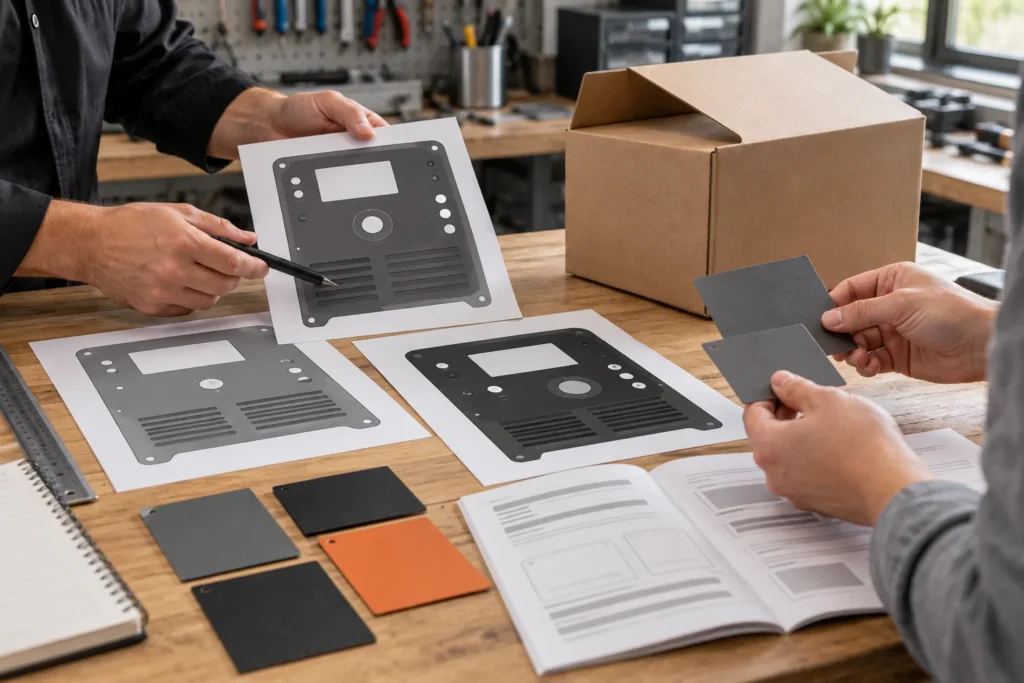
The control panel should reflect the approved operating sequence, not simply a preferred visual style. Review how users select processes, adjust parameters, connect accessories and recover from errors. A panel drawing becomes useful when it connects each visible control to a documented behavior and a checkable interface requirement.
Walk through realistic operator tasks
Ask an intended user to work through setup, process selection, starting, adjustment and shutdown using a mockup. Check parameter units, abbreviations, warning visibility and language length. Identify what happens when the operator changes modes, reconnects a remote or restores power. Record the intended behavior before commissioning firmware or artwork.
For pulse functions, define how peak current, background current and pulse timing appear to the user. Refer to the TIG pulse-control definitions when preparing that record. A translated label must retain the same technical meaning; a larger display does not by itself establish improved process control.
Review fit and service access together
Confirm connector spacing, glove access, cable routing, panel readability and access for authorized service. Keep the enclosure, handles and transport packaging in the same mechanical review. Do not freeze an attractive front view while the rear connection layout, cooling path or accessory storage remains unresolved.
AI-generated illustration of an ODM design review, not actual GWELD designs or facilities.
Agree Design Deliverables at Each Development Gate
Use development gates to connect spending and approvals to evidence. A gate should identify the documents, sample configuration, unresolved items and authorized decision-maker. The suggested sequence below is a planning template, not a promised GWELD schedule. The manufacturer and buyer should adapt it to the scope and risk of the project.
Define what completion means
| Development gate | Evidence needed for a decision |
|---|---|
| Requirements review | Controlled brief, platform gaps, exclusions and responsible owners. |
| Concept review | Proposed architecture, interface concept and identified design risks. |
| Prototype review | Identified revision, functional observations and open corrective actions. |
| Validation review | Agreed tests, results, deviations and relevant model-specific evidence. |
| Pilot review | Manufacturing instructions, inspection records and batch discrepancies. |
| Production release | Approved configuration, released files, service information and change rules. |
Make approval specific
An approval should state the revision and what it permits next. Approval of appearance does not approve welding performance, and approval of one prototype does not approve an undocumented production substitution. Keep conditional approvals attached to a closure list so purchasing pressure does not erase an engineering restriction.
Where the buyer needs access to editable drawings or firmware-related deliverables, list the exact file formats and delivery stages. Do not assume that paying a sample charge includes source files, production tooling or unrestricted reuse. Those are separate scope items that need written agreement.
How Should Design Files and Confidential Information Be Managed?
Identify the information each party brings to the project and the files the project will generate. Agree access, permitted use, delivery and responsibility before sharing sensitive details. This is a project-management checklist, not a contract template. Qualified legal advisers should review rights, confidentiality and any exclusivity arrangements for the actual transaction.
Separate existing assets from project outputs
The manufacturer's existing power platform, software libraries and production methods may differ from buyer-supplied artwork, a new panel drawing or jointly developed interface logic. Create an asset register that records each item, its source and the agreed deliverable. Do not infer ownership or exclusivity from the term ODM alone.
这 WIPO guidance on technology-transfer agreements highlights defining confidential information, access and permitted purposes. Use that guidance to prepare questions for advisers. A confidentiality agreement and an agreement about design ownership address different questions; neither should be assumed to replace the other.
Make information handling practical
Assign document owners and approved recipients, identify controlled versions, and use an agreed method for exchanging files. Share what the current task needs rather than distributing every source file to every participant. Include subcontractor access, retained service records and project-end file handling in the review. Avoid publishing confidential customer drawings as marketing examples without permission.
Plan Safety, EMC and Application Validation Early
Plan validation while the design is still flexible, and link each test to a requirement and configuration. A change to the enclosure, control board, interface or input variant may affect the evidence needed. Ask a competent technical or compliance specialist to determine applicable requirements rather than treating a logo or certificate photograph as complete proof.
Separate requirements checking from intended-use trials
Checking whether a design meets its specification and confirming that it suits the intended work are related but different activities. The plan should include functional checks, representative welding trials, installation conditions and serviceability where relevant. Define the method, responsible personnel, acceptance criteria and records before the supplier performs the demonstration.
The official IEC 60974-1 scope describes safety and performance requirements for industrial and professional welding power sources. IEC 60974-10 addresses electromagnetic compatibility of arc-welding equipment and related equipment. These references identify subjects to review, not proof that a GWELD model is certified or that a particular edition is mandatory in every market.
Keep the complete configuration in the test record
Record hardware and software revisions, input variant, torch, cooler, remote device and supplied cables. Use qualified personnel and the approved instructions; never improvise energized electrical tests for a marketing demonstration. If the configuration changes, have the responsible team determine which evidence remains valid and which checks need repeating.
What Should Prototypes and Pilot Builds Prove?
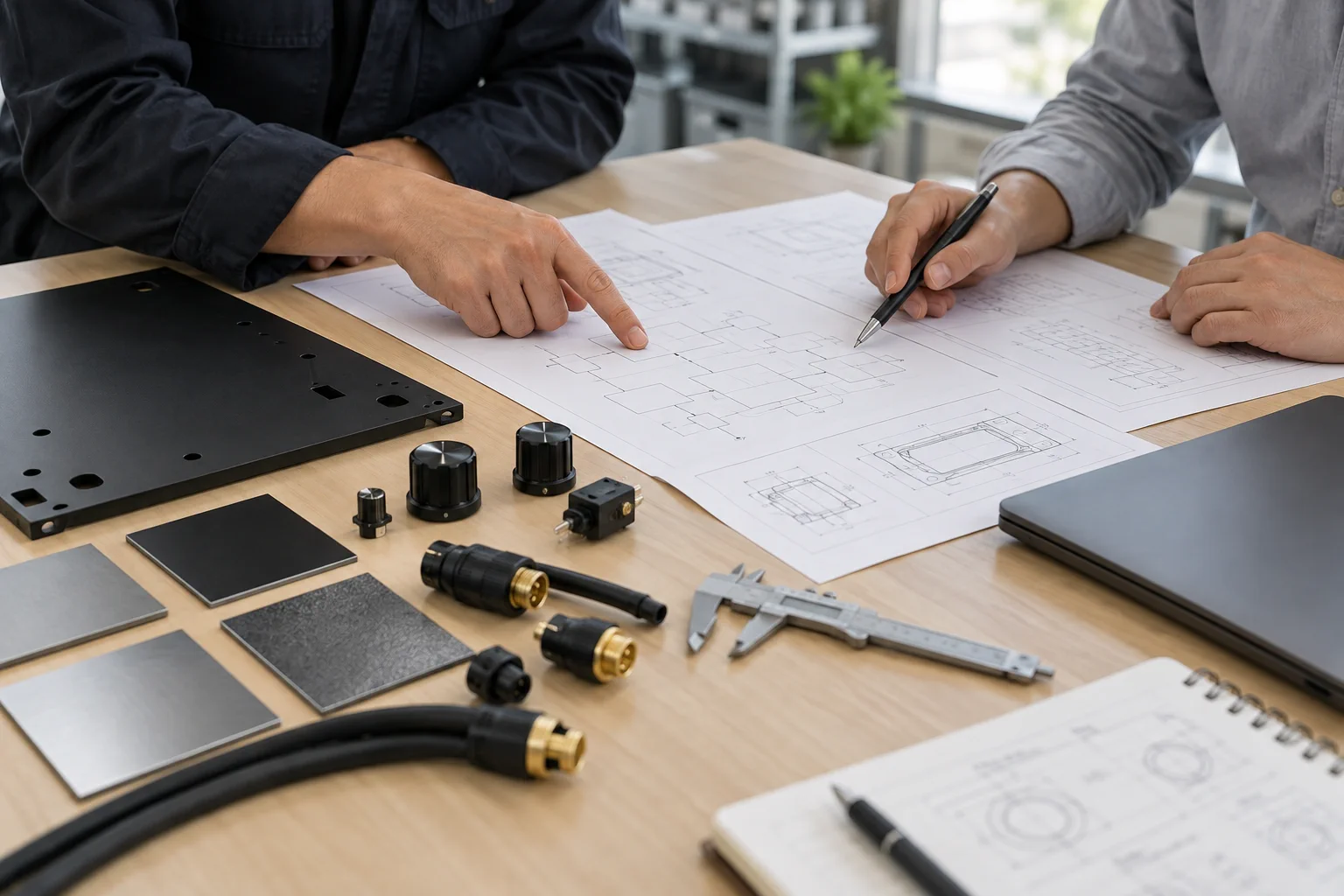
A prototype should answer specific design questions, while a pilot build should show whether the released design can be made and checked consistently. Neither stage is successful merely because a sample looks finished. Establish the questions, observations and release criteria for each build before committing to the next stage.
Identify the purpose of each sample
Distinguish an appearance mockup, an engineering prototype and a production-intent sample. Mark limitations clearly. A nonfunctional panel mockup cannot demonstrate arc behavior, and a hand-built engineering unit may not represent final tooling, cable routing or assembly instructions. Retain photographs and revision references so later reviewers understand what was actually evaluated.
Use representative materials and accessories in application trials, and keep welding-procedure qualification separate from equipment development. For a DC platform, the DC TIG sample-acceptance checklist supplies a more detailed operating record. Do not repeat a broad factory tour when the open question is a specific start sequence or remote-control behavior.
Review the pilot as a manufacturing exercise
Check assembly instructions, inspection access, firmware loading, calibration records, accessory packing and documentation. Track discrepancies by unit or lot and identify whether they come from design, supply or assembly. Agree the pilot quantity with engineering and quality; there is no universal batch size that proves every ODM project ready for production.
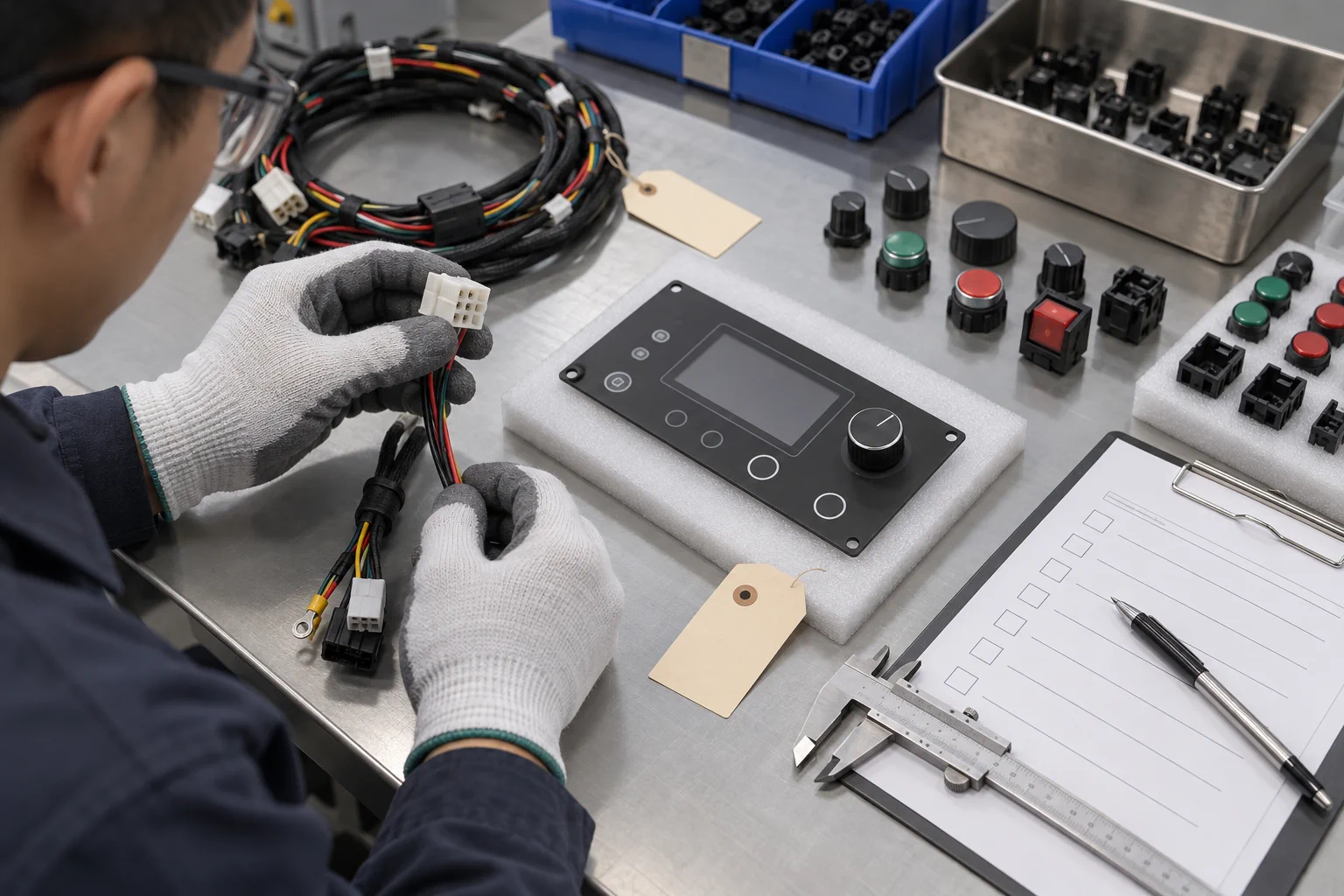
AI-generated illustration of prototype review; it does not represent an approved GWELD configuration or test result.
Control Revisions After the Design Is Approved
Production release should establish a controlled baseline, including hardware, software, accessories and documents. Later changes need a recorded impact review rather than informal approval through a chat message. This protects service compatibility and makes it possible to connect a field issue to the configuration that actually shipped.
Keep one release package
The release package should identify drawings, bill-of-materials revision, approved alternatives, firmware or parameter version, labels, manuals, test instructions and packing requirements. Name the person authorized to release each file and the method used to withdraw obsolete versions. Keep a reference sample where useful, but do not let it replace a readable configuration record.
For a 自有品牌 TIG 焊机, align the model identity across machine, carton, manual, supporting reports and spare-parts list. A brand overlay should not obscure information needed for installation or service. Have the responsible team review destination-market documents for the exact product being supplied.
Review changes for more than price
A replacement connector, fan, electronic component or software revision can affect fit, performance, documentation or evidence. Record the reason, affected units, validation decision and service consequences before implementation. Separate temporary deviations from permanent design changes, and define how customers and service partners learn which parts remain compatible.
Prepare an Itemized ODM Quotation and Launch Plan
Request a quotation that separates engineering work from repeat production and makes dependencies visible. A useful launch plan identifies the next decision, its required inputs and who approves it. Compare suppliers using the same brief and deliverables, rather than treating the lowest unit price as the cost of the entire development project.
Keep one-time and recurring costs distinct
| Quotation item | Scope to clarify |
|---|---|
| Engineering and samples | Design tasks, prototype purpose, review rounds and included tests. |
| Tooling and fixtures | Items included, approval stage, access, maintenance and replacement arrangements. |
| Compliance work | Responsible parties, model scope, laboratory work and excluded services. |
| Production supply | Approved configuration, accessories, quantity basis and delivery assumptions. |
| Service and changes | Documentation, spares, update support and future engineering charges. |
Build a schedule around approval dependencies
Request estimated milestones after the manufacturer reviews the brief. Component availability, artwork approval, tooling and unresolved tests can affect timing. Record what starts each quoted lead time and what happens when the buyer changes the specification. Do not promise a fixed launch date from a general website statement.
GWELD's published OEM and ODM cooperation process covers requirements, design, engineering, prototypes, production and support. Use it to start a project review, then request the exact scope, evidence, quantities and commercial terms through the GWELD development inquiry team. Public capability descriptions do not replace an agreed project specification.
Related Products

TIG 180/200/225P ACDC
A compact, air-cooled TIG/Stick inverter welder designed for AC and DC welding.
- 专为铝焊设计,精确控制细薄易损材料。.
- 先进的脉冲技术有助于减少热输入并改善焊缝外观。.
- 采用耐用组件和坚固结构,确保长期可靠性。.

TIG 315/350P ACDC
A compact, air-cooled TIG/Stick inverter welder designed for AC and DC welding.
- 适用于饮水机.
- 采用更坚固耐用的材料。.
- 配备精选且可靠的附件,以提升焊工的体验。.
- 工业级焊机采用更高的冗余设计,可提高可靠性、延长使用寿命并增强耐用性。.
TIG 300/400/500 直流脉冲
A compact, air-cooled TIG/Stick inverter welder designed for AC and DC welding.
- 使用更坚固耐用的材料
- 适用于饮水机.
- 配备精选且可靠的附件,以提升焊工的体验。.
- 工业级焊机采用更高的冗余设计,可提高可靠性、延长使用寿命并增强耐用性。.
相关解决方案


重型制造
重工业严苛需求的终极TIG焊机解决方案。我们的设备采用坚固的材料和周到的研发,可提供高强度不锈钢接头所需的精确控制,以及厚碳钢深层熔透所需的可靠动力。体验专业性能,平衡设计,专为最苛刻的制造环境而打造。.

Frequently Asked Questions
Conclusion
Select an ODM TIG welding machine manufacturer through a clear product-development brief, a platform-gap review and evidence-based design gates. Decide what must change, what each party will deliver, how prototypes will be evaluated and which records define the production release. Keep responsibilities and unresolved questions visible throughout the project.
The linked product platforms are starting points for discussion, not claims that every proposed modification is available or approved. Send your target users, welding applications, electrical markets, customization needs and order plan to the GWELD project consultation team for a scoped proposal. Confirm engineering, compliance and commercial requirements for the exact design before committing to volume.