


Cheap TIG Welder: Industrial Cost and Buying Guide
Introduction
A cheap TIG welder can reduce the initial equipment budget, but industrial buyers still need stable arc starts, adequate duty cycle, correct input power, serviceable components and documented support. The right decision is the lowest evaluated cost for an accepted production result, not simply the lowest invoice price.
This guide gives factories, contractors and OEM teams a practical method for comparing low-cost TIG equipment. It covers process fit, AC/DC requirements, duty-cycle evidence, controls, sample-weld testing, spare parts, warranty scope and fleet-level total cost of ownership.
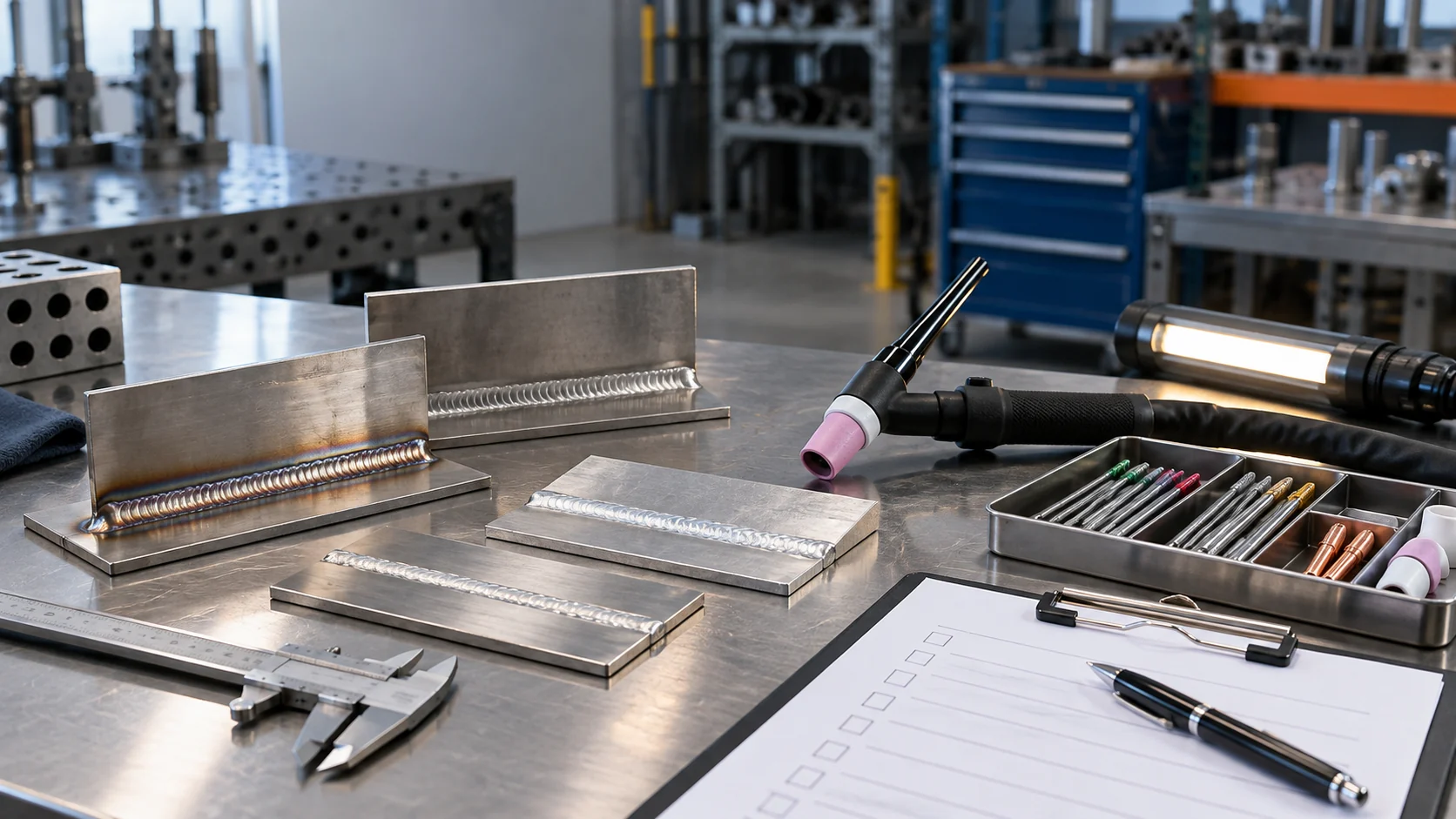
Define Cheap by Accepted Output, Not Invoice Price
Separate purchase price from evaluated cost
The phrase cheap TIG welder describes a price position, not a verified production capability. Two machines with similar maximum amperage can create very different costs when the buyer includes installation, cooling, torches, controls, rejected starts, repair delays and operator setup time. Start the comparison with the welds the equipment must produce, then price the complete configuration needed to produce them.
Define accepted output in measurable terms. Record the material, thickness, joint type, weld position, expected production pattern, visual standard and required inspection. If a quotation cannot be connected to those conditions, the low number is not yet comparable with another offer.
Use a common bid sheet
Send every supplier the same requirement sheet and ask them to identify inclusions, options and exclusions. A complete response should distinguish the power source, torch, ground lead, regulator or flow control, remote device, cooling equipment, starter consumables, power plug, documentation and commissioning support. This prevents an apparently cheaper base unit from being compared with a ready-to-run package.
For a broader framework, review our industrial TIG welder selection guide. Use its application and fleet questions before reducing the decision to price.
Match Process, Materials and Current Requirements
Decide whether DC or AC/DC is required
Steel and stainless production commonly uses DC TIG, while aluminum normally requires an AC-capable system. Buying a DC-only unit for an aluminum program is not a saving because it does not meet the process requirement. Conversely, a shop that has only documented DC work should not pay for AC features unless future work justifies them.
Miller’s TIG welding basics guide recommends starting with material type and thickness when choosing a power source. Use the exact machine manual and qualified procedure to confirm the final mode and operating range.
Specify the operating window, not only peak current
A maximum-amperage label does not describe starting behavior, low-current control or continuous production capability. Thin assemblies may need repeatable low-amperage starts and a stable arc during downslope. Thicker parts may require sustained output, water cooling or a larger torch. Record both ends of the useful range and the time spent at typical production current.
Include tungsten, filler and gas decisions in the cell review. The TIG welding tungsten guide covers electrode identity and preparation, while the TIG welding wire guide covers filler selection and feeder integration. These items should remain separate specifications even when one supplier provides the complete package.
Read Duty Cycle and Input Power Correctly
Compare duty cycle at the same rated output
Duty cycle is the share of a ten-minute period that a power source can weld at a stated load before it must cool under the rating conditions. A percentage without its current, voltage and test basis is incomplete. Miller’s equipment documentation explains that exceeding the rated duty cycle can stop output through thermal protection and may damage equipment or affect warranty coverage.
Do not compare one machine at its maximum current with another at a lower rated current. Put the current, voltage, percentage and applicable ambient or standard information in adjacent columns. Then compare the rating with the real arc-on pattern for the job. A low-cost machine can be adequate for short repair welds yet create repeated delays in a fixture-based production cycle.
Verify the available electrical supply
Record input voltage, phase, frequency, branch-circuit capacity, plug arrangement and site location before requesting a quote. Installation work can exceed the price difference between two power sources. Confirm the nameplate and manual requirements with the responsible electrical team instead of assuming that similar output amperage means similar input demand.
Include generator use only when the supplier provides applicable requirements for that model. Voltage and frequency quality, grounding and generator sizing can affect reliable operation. A field contractor should also include cable length, transport, enclosure protection and environmental exposure in the evaluation.
Check the torch rating as part of the system
The power source duty cycle does not override the torch and cable rating. Miller notes in its torch purchasing guidance that air- and water-cooled systems differ in portability, component count and duty-cycle capability. Match the torch, lead and cooling arrangement to the planned work.
Check Arc Starts, Controls and Repeatability
Test the controls operators will actually use
A budget machine still needs a control sequence that production can repeat. Confirm the available start method, remote amperage control, pre-flow, upslope, downslope, post-flow and pulse functions that the approved job requires. Do not assume that two interfaces use the same parameter definitions or ranges because the labels look similar.
For aluminum, verify AC balance and frequency behavior on the exact model. For heat-sensitive stainless or thin material, confirm how pulse frequency, peak time and background current are set. Miller describes pulse as a cycle between peak and background current that can help manage heat input and puddle control, but final settings must come from an applicable procedure and trial.
Evaluate repeatability across starts and shifts
One attractive demonstration bead is not enough. Ask the operator to perform repeated starts on representative material, stop and restart after normal cooling periods, and reproduce the setup after another trained operator takes over. Record the machine settings, torch components, tungsten condition, filler lot and gas arrangement so the result can be repeated.
Check whether settings are easy to document and restore. If the panel uses unlabeled percentages, hidden menus or ambiguous icons, the buyer should account for training and setup risk. Memory functions may help a fleet, but only when the saved parameters can be controlled and transferred under the site’s procedure system.
Calculate the Total Cost of Ownership
A purchase decision needs a cost model tied to the intended production period. The following table organizes the main categories. Use actual quotations, internal labor rates and documented downtime assumptions rather than generic savings claims.
| Cost category | Items to include | Evidence to request |
|---|---|---|
| Acquisition | Power source, torch, leads, remote, cooling, regulator and starter kit | Itemized supplier quotation |
| Installation | Electrical work, plugs, gas setup, fixtures and commissioning | Site estimate and installation requirements |
| Operation | Energy, gas, tungsten, filler and routine consumables | Trial consumption and internal rates |
| 质量 | Rejected starts, rework, inspection and scrap | Representative production trial |
| Maintenance | Torches, hoses, fans, boards, connectors and labor | Parts list, service plan and repair history |
| Downtime | Lost production, rescheduling, rental or backup equipment | Approved internal downtime rate |
| End of period | Residual value, disposal and replacement transition | Fleet policy and local requirements |
Use cost per accepted production result
Calculate a common unit such as cost per accepted assembly, qualified weld metre or productive arc hour. Keep the denominator consistent across candidates. A lower-cost machine can win if it meets the requirement and remains available; a higher purchase price can also be justified when it reduces documented rework or downtime. The calculation should expose those drivers rather than assume either conclusion.
Test the assumptions
Show a base case and at least one practical stress case using the same model. Examples include a longer repair lead time, higher production utilization or a second-shift deployment. Label assumptions clearly and have operations approve downtime values before procurement uses them in a supplier comparison.
Separate mandatory costs from scenario costs
Keep mandatory configuration items in the base comparison. Put uncertain operating factors in a clearly labeled scenario area. This stops a supplier from looking cheaper because a required cooler, remote control or electrical accessory was omitted, while also preventing speculative downtime estimates from being presented as certain expenditure.
Use the same time horizon and currency for every candidate. State whether tax, freight, import charges and financing are included. When exchange rates affect imported equipment, record the rate date and test a reasonable movement separately. Procurement should be able to trace every total back to a quotation, internal rate or approved assumption.
Evaluate Serviceability, Spares and Warranty Scope
Ask how a failure will be diagnosed
Serviceability is part of the purchase specification. Request the operating manual, fault-code information, preventive-maintenance schedule, consumable list and authorized repair route before approving the order. Confirm whether the supplier can identify common replaceable assemblies without requiring the buyer to guess from photographs.
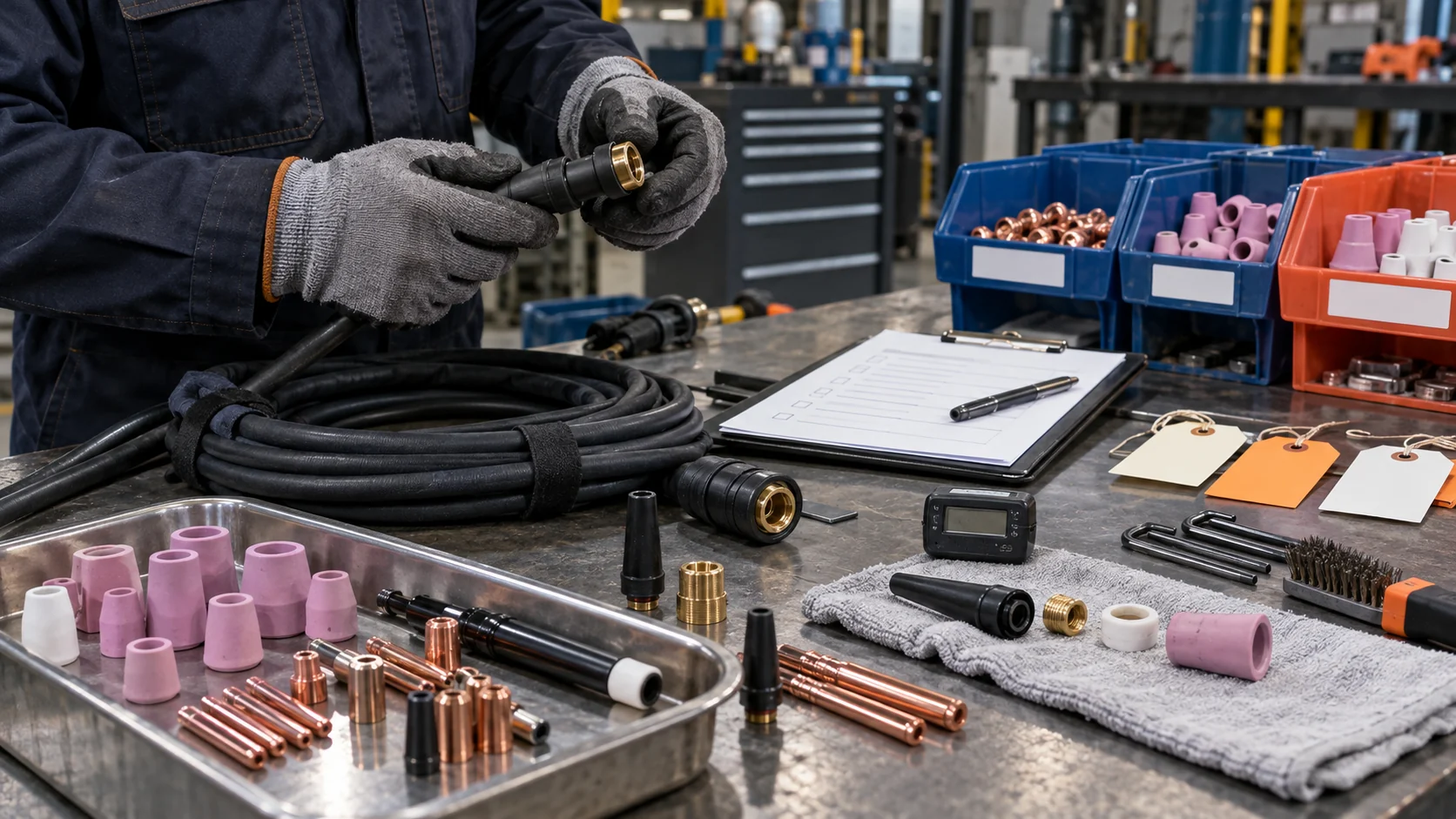
Ask for current lead times and commercial terms for torches, connectors, fans, control boards and other likely service items. Do not treat a broad statement such as “parts available” as inventory evidence. Record part numbers, the supply region and whether substitutions require technical approval.
Read the warranty as a process
Warranty length alone does not explain coverage. Compare start date, registration requirements, labor, freight, travel, excluded components, authorized service locations and the evidence required for a claim. The buyer should know who removes the machine from production, who pays transport and what temporary capacity is available during diagnosis.
Coverage differs by supplier, product and region. For example, ESAB publishes separate warranty periods and terms for power sources, torches and replacement parts in its warranty coverage information. Use the terms in the actual quotation and destination market, not a general brand assumption.
For a configuration discussion, review the GWELD welding equipment range and request the manuals, included accessories and support scope for the model under consideration.
Run a Sample-Weld Acceptance Trial
Approve the test plan before the demonstration
A useful trial reproduces the buyer’s actual constraints. Supply representative base material, thickness, joint preparation, position and acceptance criteria. Use the proposed torch, electrode, filler, shielding gas and remote control. If the supplier substitutes easier material or a different accessory package, record the difference and do not treat the result as final acceptance.
- Verify the delivered model, serial identification and included components.
- Record input supply, machine settings, torch parts, tungsten and filler.
- Run repeated starts and the planned arc-on sequence.
- Inspect the weld using the agreed visual or project method.
- Record setup time, interruptions, alarms and consumable changes.
- Repeat the setup with another trained operator where practical.
- Identify corrective actions and repeat failed checks after resolution.
Use a pass, conditional pass or fail decision
| Decision | Meaning | Required record |
|---|---|---|
| Pass | All defined acceptance points met in the proposed configuration | Signed trial record and approved configuration |
| Conditional pass | Acceptable only with listed options, restrictions or corrective actions | Updated quotation and closure evidence |
| Fail | One or more required conditions not met | Failure evidence and decision on retest or rejection |
Retain photographs, coupons where practical, machine settings and the supplier’s configuration sheet. This provides a baseline for receiving inspection and later problem investigation. It also stops an unrecorded demonstration setup from becoming an unsupported production standard.
Compare Cheap TIG Welder Options for Fleet Deployment
Pilot one unit before a fleet order
A low price becomes material when multiplied across a fleet, but so does a hidden weakness. Start with one production-representative unit and follow it through receiving, installation, operator training, routine work and a planned maintenance check. Record the issues that create supplier contact, replacement parts or production interruption.
Do not expand the order until the pilot has completed a defined period or workload. Compare the trial unit with the existing process using the same job mix and acceptance rules. A different operator, easier parts or a shorter shift can distort the result.
Standardize only the verified configuration
When the pilot passes, freeze the approved model, firmware or parameter version where relevant, torch and cooling arrangement, remote device, power connection, starter spares and documents. Require advance notice of substitutions. A model name that remains unchanged does not guarantee that every supplied component or revision is identical.
Plan backup capacity according to repair time and production criticality. A fleet may use spare machines, shared components or a supplier response agreement. Put ownership of spares, training records and parameter backups into the deployment plan.
Score risks separately from price
Use a weighted comparison only after the mandatory requirements are passed. Keep price, process fit, reliability evidence, service response, documentation and supplier capacity as visible fields. Do not allow a high score in one optional category to cancel a failed safety, electrical or process requirement.
GWELD can review the material, joint, current range, duty pattern, input supply, torch preference and deployment quantity. Send those details through the technical equipment inquiry form to request an application-specific configuration and itemized quotation.
Prepare receiving and change-control rules
Before the first fleet shipment, create a receiving checklist for model identification, accessories, visible damage, manuals and package quantities. Quarantine differences until the technical owner decides whether they are acceptable. Do not let a schedule delay convert an unreviewed substitution into a permanent standard.
Track serial numbers, installation locations, commissioning dates and repair events. This record helps the buyer compare reliability by batch and gives the supplier evidence that is more useful than an informal statement that several units failed. Link each event to the affected job and production consequence without attributing cause before diagnosis.
After deployment, review the purchasing case against actual data. Compare planned and actual installation work, consumable use, downtime and spare-part demand. Use that evidence for the next order and for supplier discussions. The objective is continuous control of cost and availability, not a one-time claim that the selected machine was cheap.
Related Products

TIG 180/200/225P ACDC
A compact, air-cooled TIG/Stick inverter welder designed for AC and DC welding.
- 专为铝焊设计,精确控制细薄易损材料。.
- 先进的脉冲技术有助于减少热输入并改善焊缝外观。.
- 采用耐用组件和坚固结构,确保长期可靠性。.

TIG 315/350P ACDC
A compact, air-cooled TIG/Stick inverter welder designed for AC and DC welding.
- 适用于饮水机.
- 采用更坚固耐用的材料。.
- 配备精选且可靠的附件,以提升焊工的体验。.
- 工业级焊机采用更高的冗余设计,可提高可靠性、延长使用寿命并增强耐用性。.
TIG 300/400/500 直流脉冲
A compact, air-cooled TIG/Stick inverter welder designed for AC and DC welding.
- 使用更坚固耐用的材料
- 适用于饮水机.
- 配备精选且可靠的附件,以提升焊工的体验。.
- 工业级焊机采用更高的冗余设计,可提高可靠性、延长使用寿命并增强耐用性。.
相关解决方案


维护与维修
为应对不可预测的维修需求而打造的终极 TIG 焊机解决方案。我们的设备采用坚固的材料和周到的研发,可提供精密的电弧控制,满足精致不锈钢维修的要求,同时还能提供可靠的动力,用于崎岖场地的维修。体验专业性能,尽享平衡的设计,它紧凑、便携,并经过精心设计,可让您的操作随时准备就绪,无论身处何地。.

Frequently Asked Questions
Conclusion
The best cheap TIG welder for industrial work is the lowest evaluated-cost system that passes the application, electrical, duty-cycle, quality and support requirements. Start with a common requirement sheet. Compare complete configurations, verify ratings under the same conditions and approve the equipment through representative weld trials.
Include installation, consumables, rework, maintenance and downtime in the cost model. For fleet orders, pilot one unit and standardize only the tested configuration. To compare a GWELD option, send your material, thickness, joint, production pattern, input supply and required accessories to the GWELD technical team for an itemized quote.


