Weld Cleaning vs Passivation: Stainless Steel QC Guide
Introduction
Weld cleaning vs passivation is a question about different surface-treatment objectives. Cleaning removes unwanted material; pickling removes surface scale and a thin metal layer; chemical passivation treats a suitably clean stainless surface to remove free iron and support its protective passive condition. A bright weld alone does not establish that the required treatment or verification has been completed.
For fabricators, equipment buyers and quality teams, the practical question is what evidence permits a part to leave the finishing station. This guide separates appearance, process control and acceptance documentation. It provides a specification framework for discussing a weld passivation machine, without assuming that every cleaner performs every finishing function or that one treatment fits all stainless grades.
Weld Cleaning, Pickling and Passivation: What Changes?
Use the following distinctions when writing a purchase request or reviewing a supplier demonstration. Process names alone are not acceptance criteria. Identify the initial surface condition, required result and approved method before selecting equipment.
| Term | Primary purpose |
|---|---|
| Cleaning | Remove unwanted residues or contamination using a suitable process. |
| Pickling | Remove oxide scale and a thin layer of surface metal. |
| Chemical passivation | Treat a clean surface to remove free iron and promote a passive condition. |
| Polishing | Change surface finish; a separate capability and acceptance requirement. |
Separate the process from the equipment label
The worldstainless guide to pickling and passivation explains these surface-treatment distinctions. A commercial label such as stainless passivation machine does not specify the complete treatment, chemistry or inspection route. Ask the supplier to describe the exact function offered by the quoted model.
Keep equipment selection separate from the release decision. Purchasing can compare packages, while the responsible quality or corrosion specialist defines what must be demonstrated. For the broader equipment comparison, use the GWELD weld cleaning machine buying guide.
Why Weld Heat Tint Needs Its Own Acceptance Check
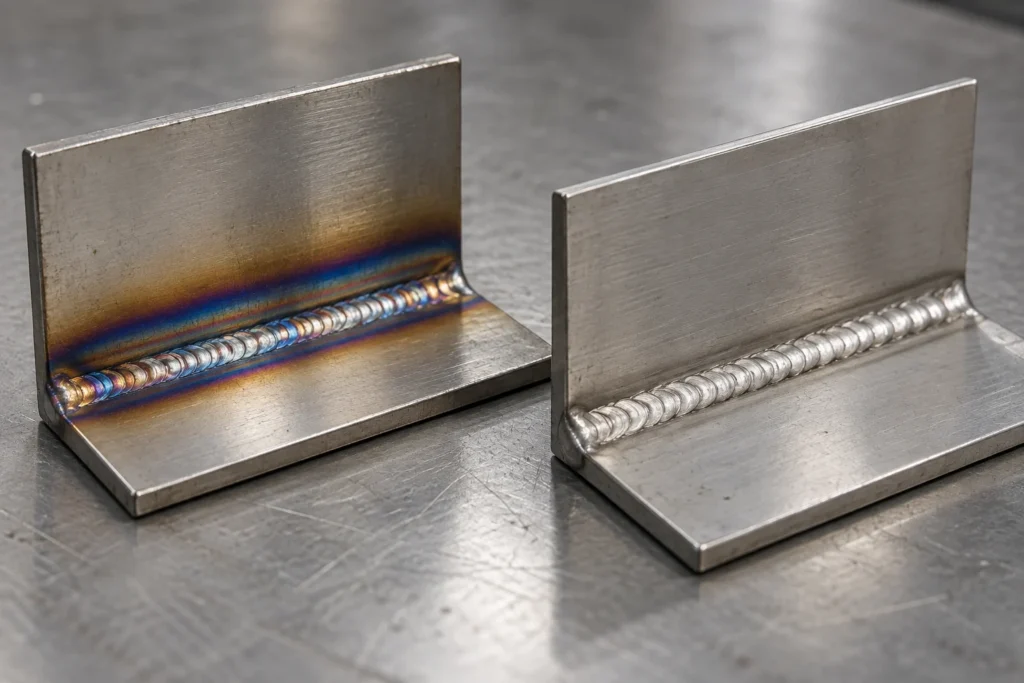
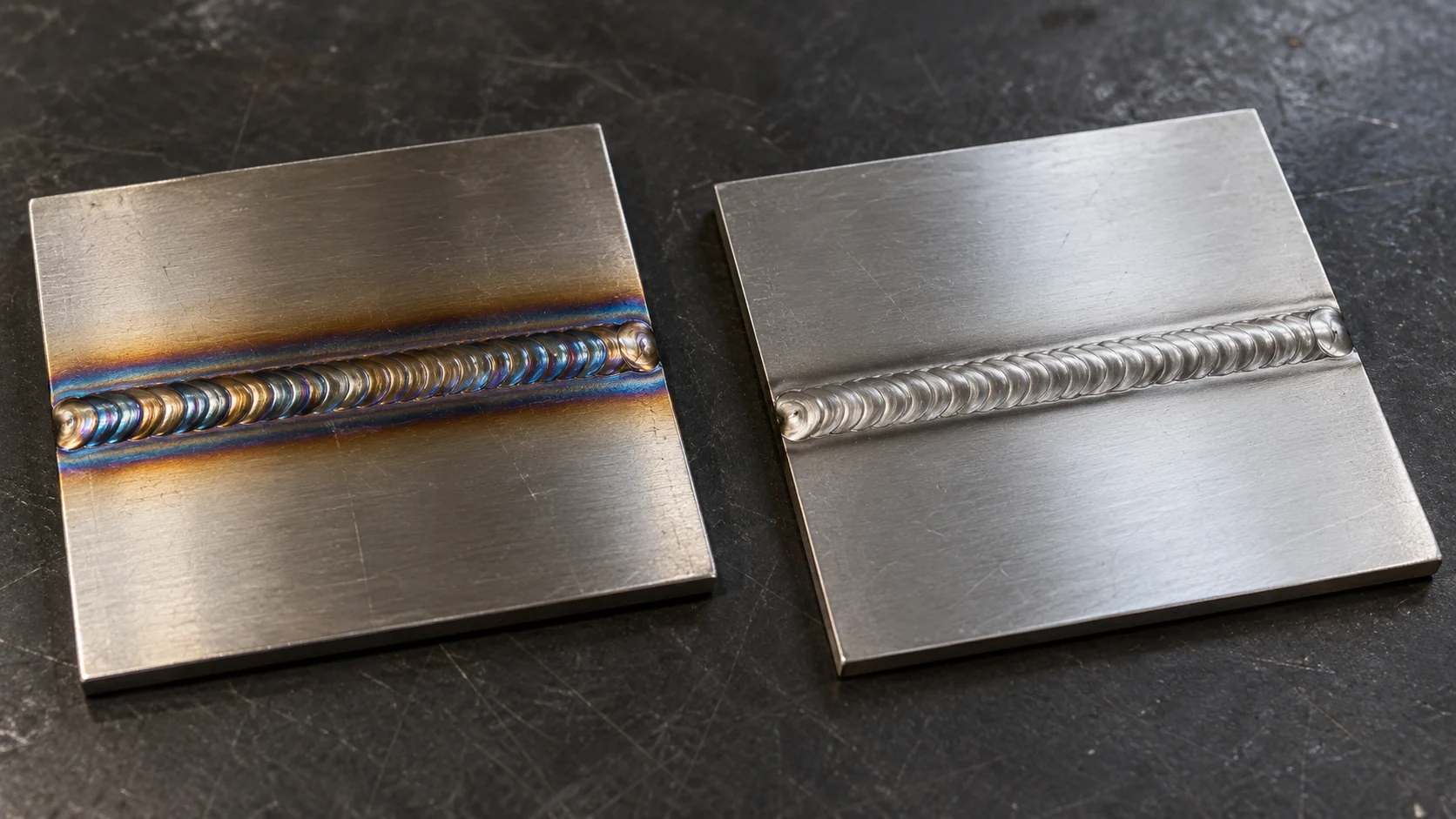
Weld heat tint removal concerns the oxide and affected surface around a weld. Heat tint can accompany a chromium-depleted surface zone with reduced corrosion resistance. Treating this condition is different from removing loose dirt or checking whether a part looks shiny under a workshop lamp.
Record the starting condition
Photograph the same area before and after a trial using consistent lighting, distance and orientation. Record alloy grade, surface finish, weld location and which face is visible. Include starts, stops, corners and difficult access areas. A photograph of one easy external seam cannot represent an internal pipe root or every joint in a production batch.
A proposed sample map might include an external butt weld, an internal corner and a repaired start-stop area. These are inspection locations, not universal test requirements. Select the actual locations from the drawing and service conditions. Keep each sample identified so that an attractive after-treatment image cannot become detached from its original part.
Use colour carefully
The worldstainless guidance links visible heat tint with reduced available corrosion resistance. However, a colour photograph does not measure oxide depth or certify fitness for service. Establish project-specific acceptance with the responsible specialist, including any required surface treatment and testing. Do not invent a universal acceptable colour limit from a general blog image.
Can an Electrochemical Cleaner Also Passivate a Weld?
Some electrochemical systems are offered for cleaning and passivation-related treatment, but the claimed result must be tied to the exact equipment, consumables and procedure. Do not infer a qualified outcome from the words electrochemical, inverter or passivation on a product listing.
Ask for a model-specific scope
- Which functions are included: cleaning, polishing, marking or a defined passivation treatment?
- Which stainless grades and starting surface conditions are covered?
- Which brush, contact tool and approved liquid form the tested combination?
- What preparation and post-treatment steps are required?
- What inspection evidence supports the supplier's particular claim?
Request a demonstration on your representative material. If the supplier changes the liquid, brush or operating mode during the trial, record the change. A demonstration with a different package does not establish what the quoted package will deliver. Any unresolved function should remain an explicit quotation exclusion or an open technical item.
Avoid unsupported equivalence
An electrochemical cleaning demonstration is not automatically equivalent to a specified chemical passivation treatment. Where a contract names a particular process or standard, have the proposed route reviewed for conformity before substituting equipment. This article does not certify any GWELD model to a passivation standard. Obtain the exact product documentation and an application-specific acceptance agreement.
Write a Surface-Treatment Specification Before the Trial
A useful specification describes the incoming part, the required finished surface and the evidence needed for release. Writing only remove discoloration leaves procurement, production and inspection free to interpret success differently.
Define the part and service
List the stainless grade, drawing revision, material thickness, existing finish and weld arrangement. Identify product-contact surfaces, visible architectural surfaces or areas exposed to the service environment. Record whether the component is new manufacture or a repair. These details help the responsible specialist determine a suitable treatment route rather than importing one from an unrelated assembly.
Define the inspection boundary
State whether acceptance covers appearance, freedom from specified contamination, roughness, dimensional preservation or additional performance requirements. Name the person or function authorized to approve deviations. If a supplier offers a certificate, ask what was tested, on which parts and against which requirement. A general machine certificate is not the same as a surface-treatment record for a shipment.
- Identification: drawing, part number, material and batch.
- Coverage: faces, welds and hard-to-reach areas requiring treatment.
- Process: approved procedure and permitted equipment-consumable combination.
- Acceptance: inspection method, sampling plan and release authority.
- Records: traceable results, deviations and any approved rework.
Resolve missing criteria before the commercial trial starts. Otherwise, two suppliers may both pass their own demonstration while quoting different outcomes.
Build a Repeatable Acceptance Trial
A supplier trial should test the complete proposed workflow on representative parts. The purpose is to expose practical limitations before production release, not to produce the brightest possible demonstration coupon.
Use a controlled sequence
- Assign sample identifiers and record the as-received condition.
- Confirm the approved treatment procedure and acceptance plan.
- Record the machine model, tools, consumables and operator training.
- Process the agreed locations, retaining any deviations in the trial record.
- Complete the specified post-treatment cleaning, rinsing or drying steps.
- Inspect against the agreed criteria and retain traceable results.
- Review rejects, rework and open questions before approving the package.
Include realistic access constraints. A large flat coupon is useful for initial evaluation but may hide the problems of a deep corner, a long assembly or an internal surface. Test the access arrangement that the actual operator will use. Where access cannot be demonstrated, do not assume that a larger machine or different brush will solve it.
Separate a trial from a capability claim
One successful sample is evidence about that sample and recorded process. Repeat the agreed evaluation across the variations relevant to your job. If the factory expects more than one shift, include a practical handover check: can the second operator reproduce the documented setup and inspection record? Report actual observations without converting a limited trial into a universal corrosion-resistance guarantee.
Verify Stainless Steel Passivation Without Relying on Shine
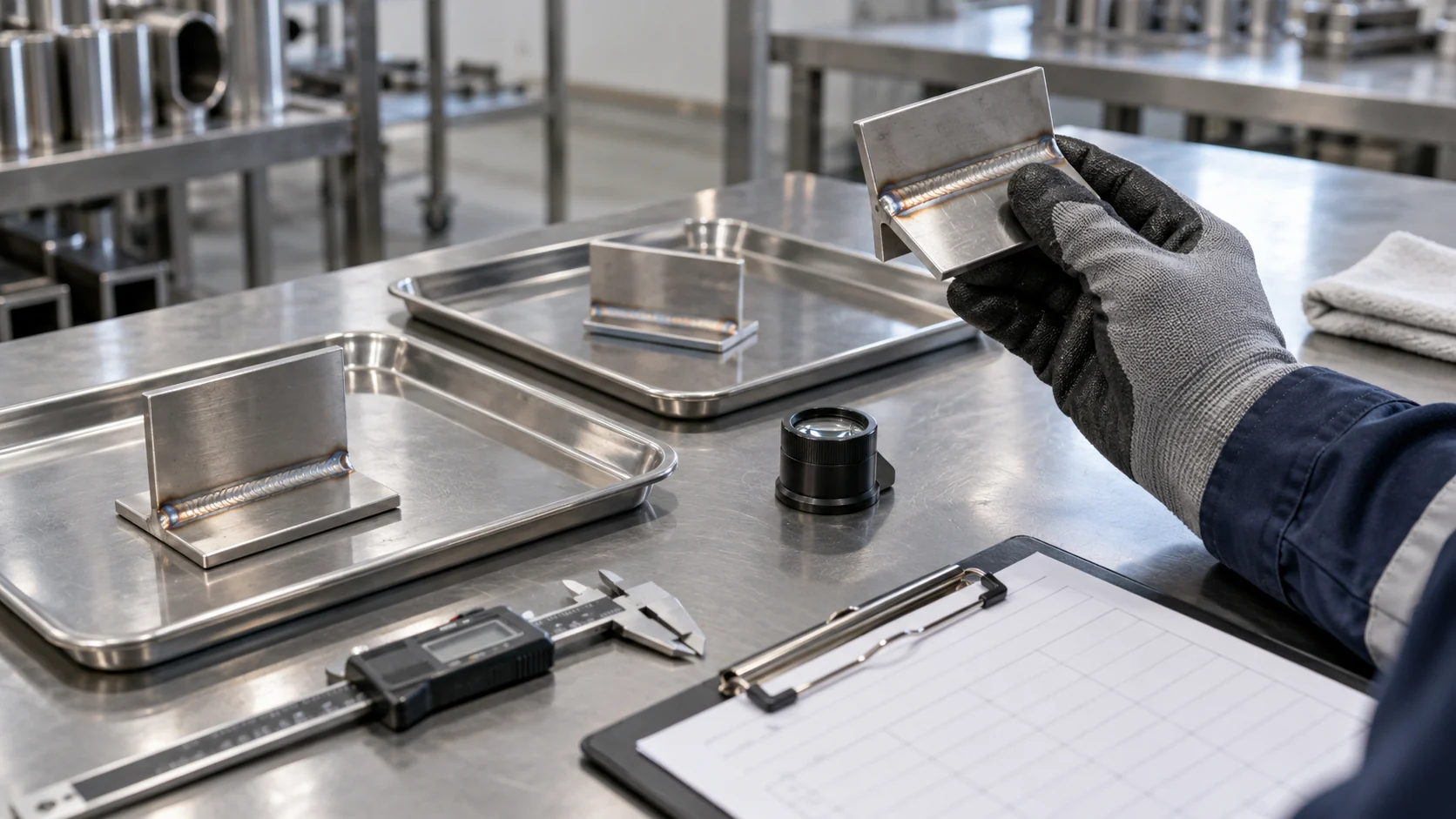
Stainless steel passivation verification starts with the governing project requirement. Select the appropriate test, acceptance criteria and sampling plan with the responsible quality specialist. Appearance and process records remain useful, but neither should silently replace a required test.
Use the applicable standard correctly
The public scope of ASTM A967/A967M describes chemical passivation treatments and alternative tests for verifying treatment effectiveness. Consult the licensed edition specified by the contract. Do not assume every listed test must be performed, or that a general product brochure establishes conformity for a particular part.
Write the chosen method and acceptance decision into the inspection plan before obtaining quotations. Confirm who performs the test, which locations are covered and how any result is linked to the lot. Where independent testing is required, include that responsibility and its lead time in the purchase scope instead of discovering it at final shipment.
Keep the evidence readable
A practical release packet can combine a part identifier, treatment record, inspection results and deviation disposition. Mark photographs as visual records. Mark test reports with their actual method and sample identity. Keep supplier declarations separate from measured results. This makes a later audit clearer and helps distinguish an undocumented claim from an accepted result.
If inspection fails, segregate the affected parts under the factory's quality process. Review the cause before repeating treatment. Rework can change appearance or dimensions, so repeat processing should follow an approved disposition rather than an informal instruction to keep cleaning until it shines.
Plan Chemical Safety, Residue Control and Handling
Post-weld treatment belongs in a controlled workplace process. Obtain current safety data sheets and operating instructions for the exact consumables. A different liquid or a generic product description is not an adequate basis for selecting ventilation, protective equipment or waste controls.
Review hazards before equipment approval
The Australian Welding Institute's pickling safety guidance highlights serious hazards associated with hydrofluoric-acid-containing pickling products and the need for risk assessment. Electrochemical alternatives also require assessment. Have a qualified site safety professional determine controls, training and emergency arrangements. Do not mix treatment chemicals or improvise a process from this article.
Include the whole station
During procurement review, identify where incoming parts wait, where treatment occurs and where finished parts are stored. Plan the specified post-treatment steps, access for inspection and appropriate residue collection. Confirm the site's waste-management route with the responsible personnel. A compact machine does not eliminate the space needed for safe handling and complete processing.
Keep treated parts separate from dirty fixtures and shared abrasives. Use the handling and packaging controls specified for the job. Assign responsibility for consumable identification and replacement, rather than leaving containers or tools interchangeable between stations. Review these arrangements during the trial because handling mistakes may not be visible in a short supplier video.
Reduce Finishing Variation Through Upstream TIG Control
Finishing results are easier to compare when the incoming weld condition is consistent. Review the qualified welding procedure, preparation and shielding alongside the surface-treatment plan. Cleaning must not be used to conceal weld defects or replace required weld inspection.
Keep process changes traceable
If a trial includes different shielding arrangements, operator techniques or weld sequences, identify those samples separately. Otherwise, a change in the incoming condition may be mistaken for a cleaning-machine improvement. The stainless steel TIG welding guide provides the broader welding context; the TIG back-purging guide addresses root-side preparation and control.
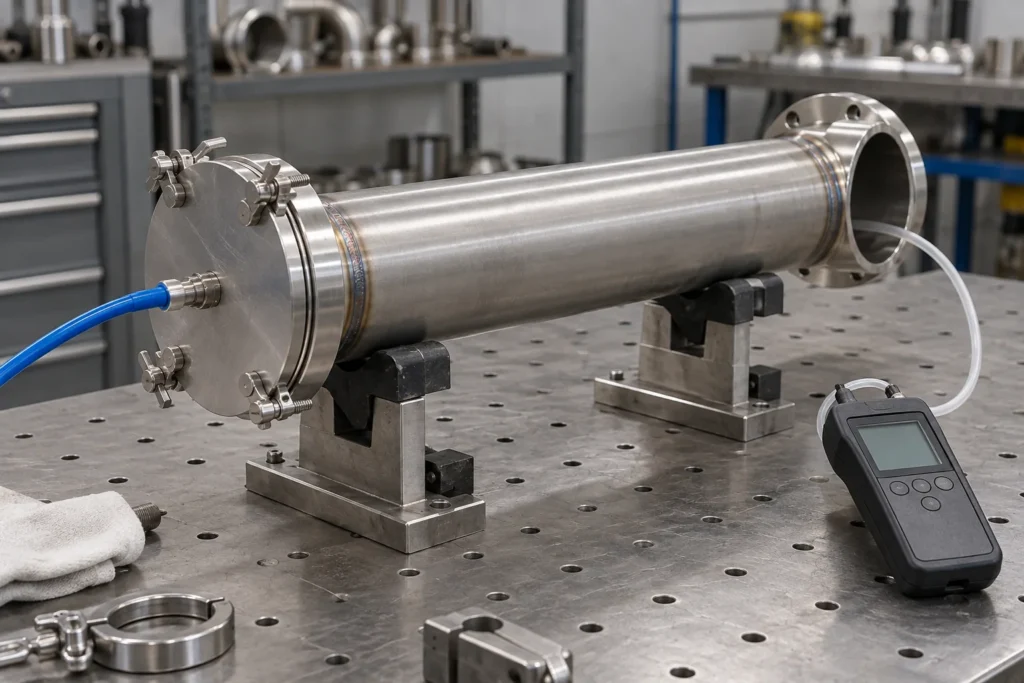
Discuss inaccessible surfaces before final assembly. When later access will be restricted, the fabrication and inspection sequence becomes part of the decision. A cleaning tool that reaches the outside of a tube does not demonstrate treatment of the internal root. Use the drawing to identify which surfaces need prevention, treatment or separate inspection access.
Close the feedback loop
Track recurring finishing exceptions by joint and incoming condition. Share the pattern with welding and quality teams. The useful question is whether a controlled upstream change reduces variability while preserving the qualified procedure, not whether more aggressive downstream treatment can hide every difference.
Compare Suppliers by Evidence and Complete-Cycle Cost
Compare equivalent accepted outcomes rather than machine labels or demonstration speed. Ask every supplier to quote the same application profile and disclose exclusions. A package that omits essential post-treatment or inspection steps is not directly comparable with one that includes them.
Measure a complete cycle
Record handling, preparation, treatment, required post-treatment work, inspection and rework separately. Use actual accepted output as the denominator for a trial-based cost comparison. Keep equipment purchase and installation assumptions visible instead of mixing them into an unexplained price-per-part claim.
For example, a buyer can prepare one worksheet per sample group with operator minutes, consumables used, inspection time, accepted quantity and rejected quantity. This is a proposed recording method, not a GWELD performance result. Fill the worksheet with observed trial data and identify what has not yet been measured.
Ask GWELD for a defined proposal
Send alloy grades, weld photographs, drawings, surface requirements, daily workload and destination electrical supply through the GWELD application consultation team. Request confirmation of the exact model, supported functions, approved consumables, training, spare parts and sample-test scope. Ask explicitly how any proposed passivation-related claim will be demonstrated for your application.
The related products and fabrication solutions below provide starting points for that conversation. A TIG power source supports welding; it is not itself a passivation machine. Confirm each item's role and do not infer cleaning capability from inclusion in a related-products list.
Related Products

Weld Cleaning Machine
Specify a weld cleaning system for the actual stainless steel grade, surface finish and inspection requirement. Confirm model-specific performance and consumables through a representative sample test.
- Confirm stainless steel grade, weld condition and required final finish.
- Request model-specific electrical and operating documentation.
- Verify compatible brushes, electrolyte, consumables and safety data.
- Validate sample results and agree service and replacement terms.
Related Solutions

General Fabrication
The ultimate TIG welder solution for diverse fabrication needs. Built with solid materials and thoughtful R&D, our machines offer the precise control required for stainless steel and the reliable power for carbon steel. Experience professional performance in a balanced design engineered for the versatile fabricator.

Maintenance & Repair
The ultimate TIG welder solution for unpredictable repair demands. Built with solid materials and thoughtful R&D, our machines provide the precise arc control needed for delicate stainless repairs and the reliable power for rugged on-site fixes. Experience professional performance in a balanced design that is compact, portable, and engineered to keep your operations ready to go—no matter the location.
Frequently Asked Questions
Conclusion
The practical answer to weld cleaning vs passivation is to specify the required surface condition, choose an appropriate treatment and verify the result with traceable evidence. Heat-tint removal, free-iron control, appearance and contractual acceptance should not be combined into an unsupported promise that a shiny weld is ready for every service environment.
Before buying a weld passivation machine, agree on representative samples, process boundaries, safety controls and inspection responsibilities. Then request a GWELD sample-based equipment proposal with your material, joint details and acceptance plan. A clearly documented trial gives procurement and quality teams a shared basis for the decision.