Private Label TIG Welder: Branding and Order Control
Introduction
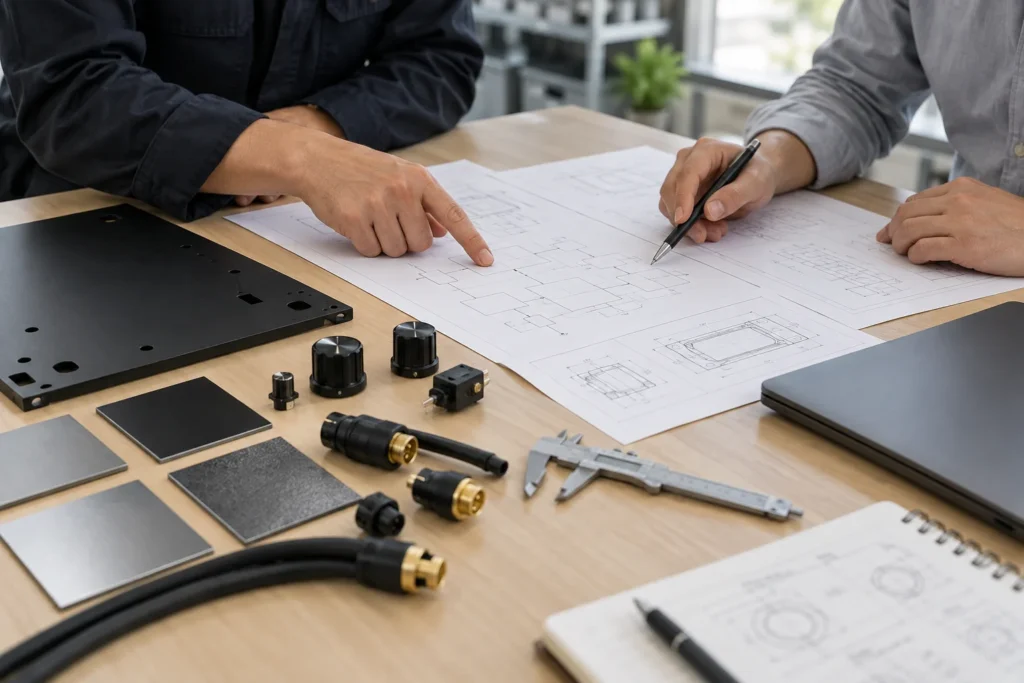
A private label TIG welder project puts your brand on a welding product supplied by a manufacturing partner. A reliable launch needs more than a logo file: the approved machine configuration, markings, manual, accessory kit and sales description must identify the same product. Treat these items as one controlled order package before approving production.
This guide is for welding brands, distributors and industrial equipment importers planning an own-brand range. It explains how to define branding scope, approve artwork, connect model identity to service records and keep repeat orders consistent. The checklists are planning tools, not proof of certification or a promise that every customization is available on every GWELD platform.
What Does a Private Label TIG Welder Project Include?
Define private label welding equipment by the actual work in the quotation, not the name of the commercial relationship. A project may use an existing TIG platform with agreed brand presentation and accessories. Changes to control logic, enclosure structure or electrical design may require separate engineering work, even if the order is described as private label.
Separate presentation changes from engineering changes
List the requested machine color, logo positions, panel artwork, carton, manual and supplied accessories. Then identify changes affecting the welding process or operation, such as a different remote interface, menu behavior or cooling arrangement. Ask the supplier to classify each request as existing, configurable, new development or unavailable before comparing prices.
A standard housing with a new color is not evidence that every electrical variant is interchangeable. Equally, a new label does not establish product exclusivity. Keep brand presentation, technical configuration and any agreed commercial restrictions as separate written items. This makes the scope easier to review when several teams or subcontractors are involved.
Use ODM only when the project needs it
For a new design requiring manufacturer engineering input, use the ODM TIG product-development guide to define design deliverables and validation gates. This article instead focuses on the approved brand package and order consistency. A single launch can contain both types of work, but their responsibilities should remain visible.
Choose the TIG Platform Before Approving Brand Artwork
Select the welding platform for its intended application before committing to printed panels or packaging. A private label TIG welding machine should be specified by process capability, electrical supply, intended materials, operating controls and accessory interfaces. Appearance approval cannot resolve missing technical requirements, and an attractive sample should not substitute for a documented configuration.
Write a configuration that purchasing can identify
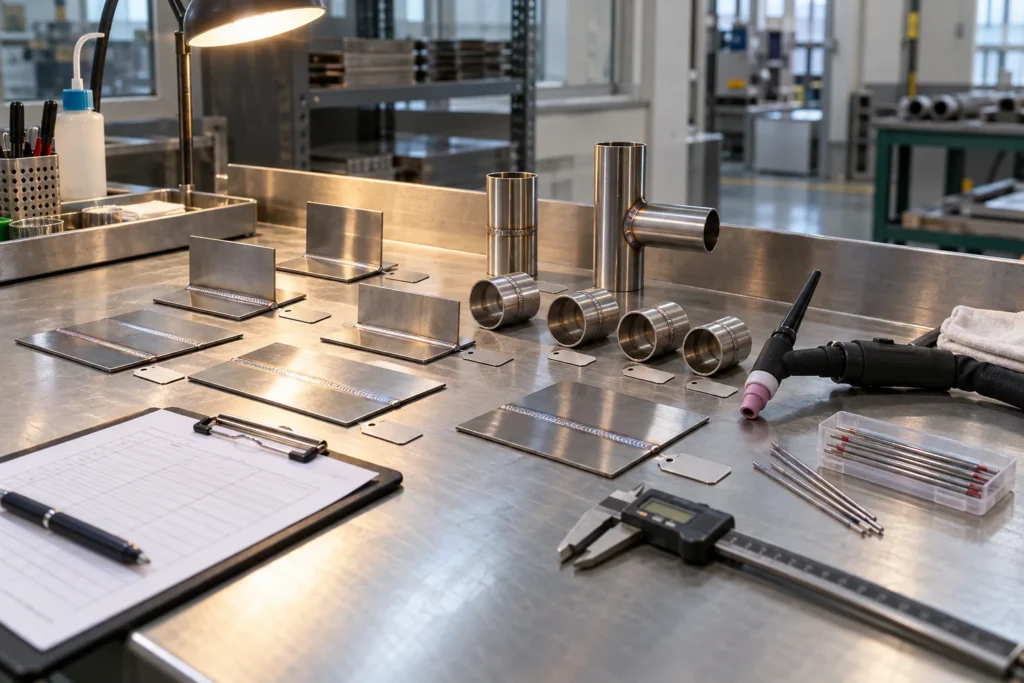
Record the exact base platform and variant, AC or DC requirements, pulse functions, input supply and cooling arrangement. Identify the intended torch, work lead, remote control and connectors. Where performance matters, request model-specific evidence under stated conditions rather than assuming that a maximum-current number represents continuous production capability.
The GWELD TIG welder platform range provides starting points for discussion. Request written confirmation of which functions and branding options are included on the selected model. Do not extend an advertised feature on one platform to the entire range or describe an optional interface as standard equipment.
Keep sample identity and quotation identity aligned
Give the sample configuration an internal reference that purchasing, engineering and marketing can all use. Link it to the quotation and accessory list. For DC equipment, the DC TIG sample-acceptance checklist can support a separate functional review. Branding approval and equipment acceptance should be connected records, not interchangeable decisions.
How Should Logos, Colors and Panel Artwork Be Approved?
For TIG welder OEM branding, approve a controlled artwork pack before releasing printing or production. It should state which file version applies to each visible surface and who may approve changes. A clear proof package helps prevent different logos, model names or control labels appearing on the machine, carton, manual and sales material.
Make every proof specific enough to review
Supply usable logo files and define the intended dimensions, placement, clear space and color references. Identify the printing or labeling surface and ask how its finish affects the appearance. Review both a digital layout and a physical example where practical; a screen preview alone cannot establish the final color, contrast or label placement.
-
- Panel proof: model designation, control labels and approved graphic positions.
- Housing proof: logo scale, location, finish and the agreed color reference.
- Packaging proof: product identity, kit variant and approved handling information.
- Documentation proof: matching cover identity and controlled manual revision.
Keep branding away from ventilation openings, controls and information that must remain readable. Do not cover existing safety or identification information with a decorative sticker. Have the responsible product team review the final layout rather than asking a graphic designer to decide technical content from a photograph.
Release a version, not a chat attachment
Store the approved files with revision references and a dated approval record. Make superseded files clearly unavailable for new production. State whether approval covers only visual layout or also the wording and physical sample. An informal message saying “looks good” can leave those questions unresolved when production uses a different file.
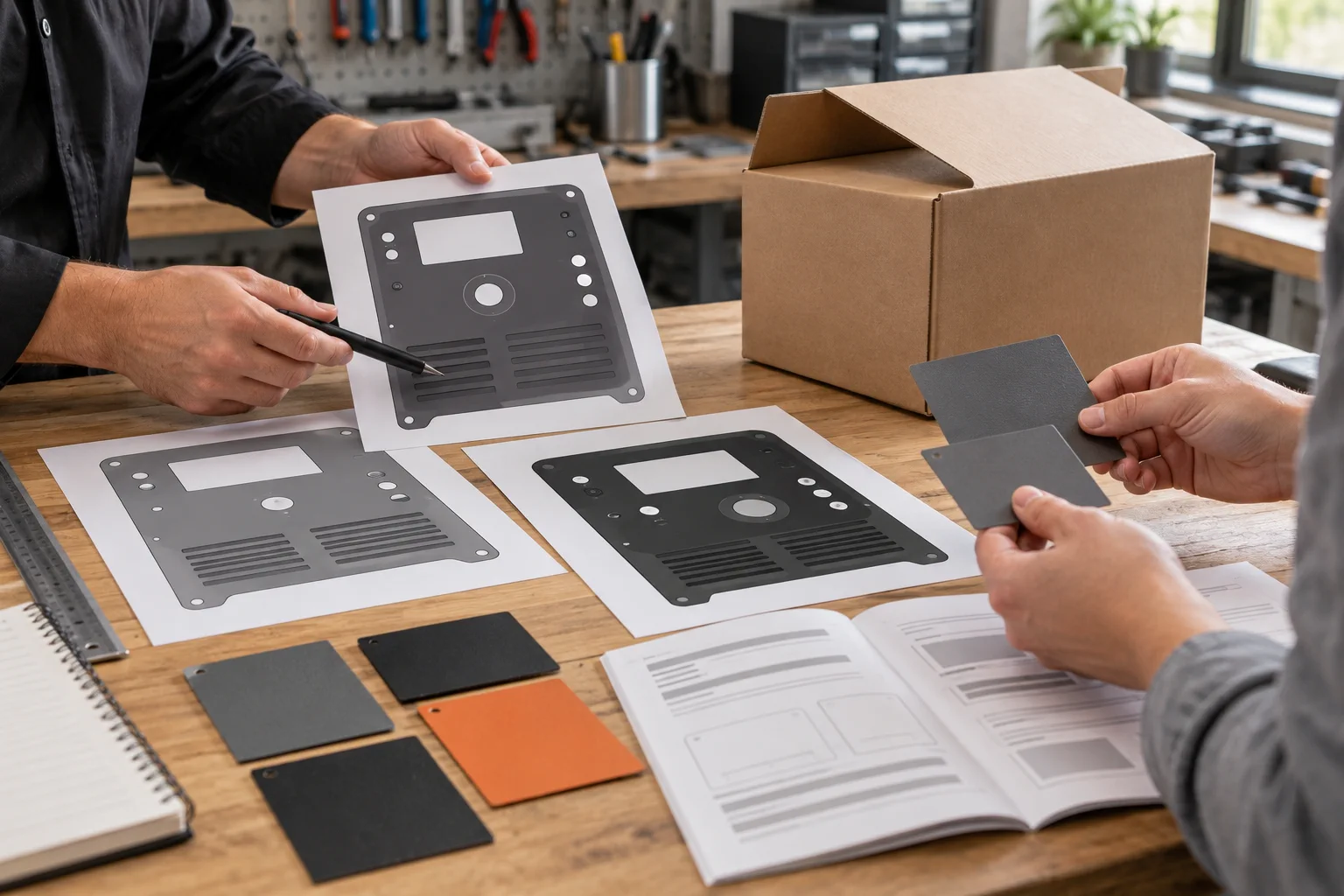
AI-generated branding-review illustration, not actual GWELD product artwork or facilities.
Keep Nameplate Data and Compliance Evidence Separate from Design
The nameplate must identify the actual supplied configuration, not copy convenient data from a similar model. Brand artwork should never create unsupported electrical ratings or certification claims. Ask the responsible technical and market-compliance teams to review the proposed markings, documentation and evidence for the precise variant and destination before release.
Review product identity and technical information together
Create an approval record connecting the commercial model name to the manufacturer platform, electrical variant and relevant documentation. Review the information needed for that configuration and market, including identification, supply information, ratings and warnings. Do not infer missing entries from a different voltage version or from the shape of the enclosure.
The published IEC 60974-1 scope concerns safety and performance requirements for industrial and professional welding power sources. Reading that scope is not a compliance assessment, and referencing a standard does not prove that a particular private-label model has been tested, certified or approved for every market.
Do not turn a logo change into a certification claim
Ask which documents apply to the selected model and how the proposed brand identity relates to them. Certification symbols, declarations and market-specific statements need appropriate review before printing. The required process depends on the actual product and destination; this guide does not supply a universal label template or authorize use of any mark.
If a specification or mark remains unresolved, record it as an open approval item. Marketing should use only the confirmed description. Separate the artwork proof from the technical release so a visual sign-off cannot accidentally be interpreted as approval of ratings, conformity evidence or mandatory information.
Match Manuals, Model Names and Service Records
A branded manual should describe the machine that the customer receives. Match the controls, operating modes, connections and supplied accessories to the approved configuration. A new cover on an unrelated manual can create service confusion even when the machine itself is unchanged, so include documentation in sample approval rather than treating it as a late packaging task.
Check the inside of the manual, not just its cover
Review diagrams, control names, interface descriptions and accessory references against the selected product. Confirm the required languages with the responsible market team and identify who checks translated technical wording. Preserve the necessary safety information; do not shorten it simply to fit a smaller booklet or make a cleaner-looking brand presentation.
Miller’s official manuals and parts service uses model or serial information to locate the applicable documentation and parts. That is a useful example of identity-based support, not a claim that GWELD uses the same system or that parts from different brands are compatible.
Decide how customers will identify their units
Agree the relationship between your sales model, manufacturer reference, unit identification and manual revision. Define the support contact and the information needed for a service request. Keep the record usable after an order is complete, including which accessories and approved revisions belong to the delivered units. Do not depend on a salesperson remembering an old sample.
Build One Packing List for the Complete Branded Kit
Treat the machine, accessories, documents and carton as one approved sales unit. An own-brand TIG welder can arrive with the correct color and still be the wrong order if the torch, connectors, manual or kit identity differs. Use a packing list that names the exact included items rather than relying on a promotional photograph.
Define what the buyer will actually receive
| Kit element | Record to approve |
|---|---|
| Power source | Sales model, platform variant and unit identification method. |
| Torch and work lead | Exact assembly references, connectors and included lengths. |
| Remote and cooling items | Included, optional or excluded items and confirmed interfaces. |
| Consumable starter pack | Actual part references and quantities, if supplied. |
| Manual and labels | Document revision, language and approved identity. |
| Carton and protection | Packing layout, contents reference and approved carton artwork. |
Give included, optional and excluded items separate lines. Check that the catalogue image does not show a pedal or cooler that is absent from the quoted kit. Ask how packing discrepancies will be recorded and resolved. This is more useful for receiving inspection than a general promise that the order includes “all necessary accessories.”
Coordinate barcodes with the sales channel
If the channel uses GS1 identification, review the GS1 GTIN Management Standard when branding changes. Its primary-brand rule calls for a new GTIN when that primary brand changes. Confirm identifiers and packaging levels with the responsible team; do not copy another brand’s barcode or assume every industrial sale uses the same channel requirements.
What Must the Branded Sample Approval Actually Cover?
Approve the branded sample against a written checklist that separates appearance, kit completeness, documentation and functional acceptance. A sample photograph can confirm visible presentation, but it does not prove electrical performance, internal construction or the identity of future production units. Record both what was checked and what remains open.
Assign a purpose to each approval
A panel proof can settle graphic placement. A packed sample can reveal whether the manual, leads and carton match the order. A functional sample has a different purpose and needs an agreed technical evaluation. State the configuration and limitations of each sample so the word “approved” does not conceal unfinished work.
-
- Identify the sample and the exact artwork and document revisions reviewed.
- Compare actual included items with the controlled packing list.
- Record differences, agreed corrective actions and the person responsible.
- Keep technical checks separate and performed by appropriately qualified personnel.
- Release production only after the relevant open items have a documented decision.
Keep a usable approval reference
Photograph the accepted visible details and keep the approved records available to purchasing and quality teams. Decide how the reference sample or equivalent controlled records will be retained. If the sample uses temporary labels, prototype accessories or an unfinished manual, list those limitations explicitly instead of treating them as the final production standard.
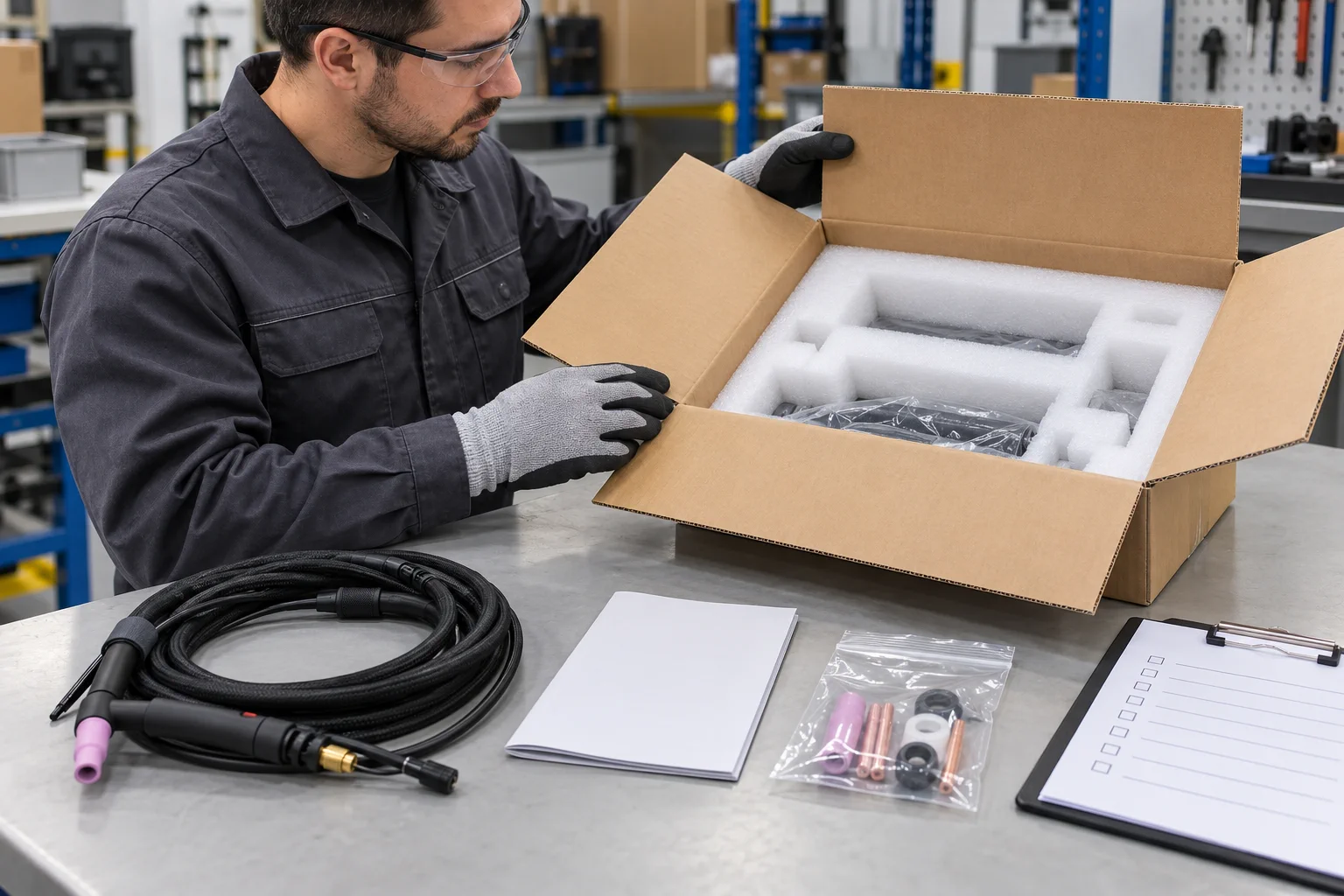
AI-generated packing-review illustration; shown items are not a confirmed GWELD supplied kit.
Compare Private Label TIG Welder Quotations by Scope
Compare private label TIG welder quotations using the same approved configuration and brand package. A unit price does not explain whether artwork setup, samples, manuals, packing, accessories or future revisions are included. Ask for an itemized proposal and keep unresolved costs visible rather than assuming that “OEM branding included” covers every requested task.
Separate one-time work from repeat supply
List artwork preparation, printing setup, sample work and any dedicated tooling separately from repeat-unit supply. Identify the included approval rounds and who supplies editable files. Ask how a rejected proof or later artwork change affects the quotation. Do not assume that paying a sample charge transfers ownership or creates an exclusive product arrangement.
MOQ and delivery assumptions should name the model, variant, artwork combination and accessory kit concerned. A quantity for standard machines may differ from one involving dedicated cartons or multiple language packs. Obtain current written terms rather than publishing a generic minimum quantity, promised production period or fixed branding surcharge.
Include receiving and support responsibilities
Clarify the information supplied with shipments, how discrepancies are raised and what documentation accompanies service requests. Compare warranty and spare-part proposals in their actual written scope. The OEM and wholesale sourcing guide supports broader supplier evaluation; use the present checklist to make the branded order itself comparable.
Control Changes Before Placing Repeat Orders
A repeat order should identify the last approved baseline and every proposed change. Do not assume that the same sales model name means the same panel, manual, accessory kit or internal revision. Ask the supplier to distinguish an unchanged reorder from a revision that needs renewed review before the order is released.
Use a short change-review record
| Proposed change | Review before repeat supply |
|---|---|
| Logo, color or panel wording | Confirm revised artwork, physical presentation and affected printed stock. |
| Manual or language pack | Check technical accuracy, applicable model and controlled revision. |
| Torch, lead or accessory | Verify interfaces, included items and the packing-list update. |
| Control or component revision | Ask engineering which functional and supporting-evidence checks are affected. |
| Brand identity or sales unit | Review model mapping, channel identifiers and relevant packaging levels. |
The table is a review aid, not a statement that any change is automatically acceptable. Have the responsible teams decide which samples, checks or records must be renewed. Resolve how obsolete labels, cartons and manuals will be controlled so they cannot be unintentionally mixed into a later batch.
Keep production and customer-facing information synchronized
Update the released order reference, packing list, manual and sales description together when the relevant change is approved. Preserve the connection between delivered units and their applicable records. This allows support staff to identify the right configuration without assuming that the latest online photograph describes every unit already in the field.
Prepare a Private Label TIG Welder Inquiry for GWELD
Send a concise project brief that separates technical requirements from brand presentation and commercial assumptions. The brief should make it possible to identify a suitable platform and return a clear list of included, optional and unresolved items. Avoid requesting an undifferentiated price for “our logo on your best machine.”
Provide the information needed for a scoped proposal
-
- Target customer and welding applications, with the intended materials and work setting.
- Required platform capabilities, electrical market and accessory interfaces.
- Initial quantity, likely reorder pattern and proposed kit variants.
- Logo files, artwork needs, color references and documentation languages.
- Packaging, channel-identifier and receiving-inspection requirements.
- Sample-review plan, approval responsibilities and the information still to be confirmed.
GWELD’s OEM and private-label cooperation page describes branding, packaging and documentation support alongside platform selection. Use that as an invitation to discuss scope, not proof that every requested configuration, certification or commercial condition is already available. Confirm the proposed model and deliverables in the actual quotation.
Ask for a controlled next step
Request a matched platform proposal, itemized scope, sample plan and list of open questions from the GWELD project inquiry team. Identify which inputs are needed before artwork or production approval. A clear response should let your technical, purchasing and brand teams review the same product package.
Related Products

TIG 180/200/225P ACDC
A compact, air-cooled TIG/Stick inverter welder designed for AC and DC welding.
- Designed for aluminum welding, with precise control for thin and delicate materials.
- Advanced pulse technology helps reduce heat input and improve weld appearance.
- Built with durable components and a rugged structure for long-term reliability.

TIG 315/350P ACDC
A compact, air-cooled TIG/Stick inverter welder designed for AC and DC welding.
- Water Cooler compatible.
- Uses stronger and more durable material.
- Equipped with selected and reliable accessories to enhance the welder’s experience.
- Industrial level welder with a higher redundancy design increases reliability, extends service life, and enhances durability.
TIG 300/400/500 DC Pulse
A compact, air-cooled TIG/Stick inverter welder designed for AC and DC welding.
- Uses stronger and more durable material
- Water Cooler compatible.
- Equipped with selected and reliable accessories to enhance the welder’s experience.
- Industrial level welder with a higher redundancy design increases reliability, extends service life, and enhances durability.
Related Solutions

General Fabrication
The ultimate TIG welder solution for diverse fabrication needs. Built with solid materials and thoughtful R&D, our machines offer the precise control required for stainless steel and the reliable power for carbon steel. Experience professional performance in a balanced design engineered for the versatile fabricator.

Automotive
From thin-gauge body panels to heavy-duty chassis components, GWELL provides the precise arc control and reliable performance required for the modern automotive industry. Our Pro-tier technology ensures every joint meets the highest safety and aesthetic standards.

Maintenance & Repair
The ultimate TIG welder solution for unpredictable repair demands. Built with solid materials and thoughtful R&D, our machines provide the precise arc control needed for delicate stainless repairs and the reliable power for rugged on-site fixes. Experience professional performance in a balanced design that is compact, portable, and engineered to keep your operations ready to go—no matter the location.
Frequently Asked Questions
Conclusion
A successful private label TIG welder order connects the technical configuration with its brand presentation, documentation and supplied kit. Approve precise artwork, preserve accurate product identification, review the complete sample and keep repeat orders tied to a controlled baseline. Separate visual approval from engineering and market-compliance decisions.
For a project-specific discussion, send your intended applications, platform requirements, artwork scope, kit list and order plan to the GWELD private-label consultation team. The related product platforms are starting points for selection, not promises that every modification or market approval is included. Confirm the exact configuration and written scope before committing to production.