TIG Welding Gas Lens: Torch Fit and Procurement Guide
Introduction
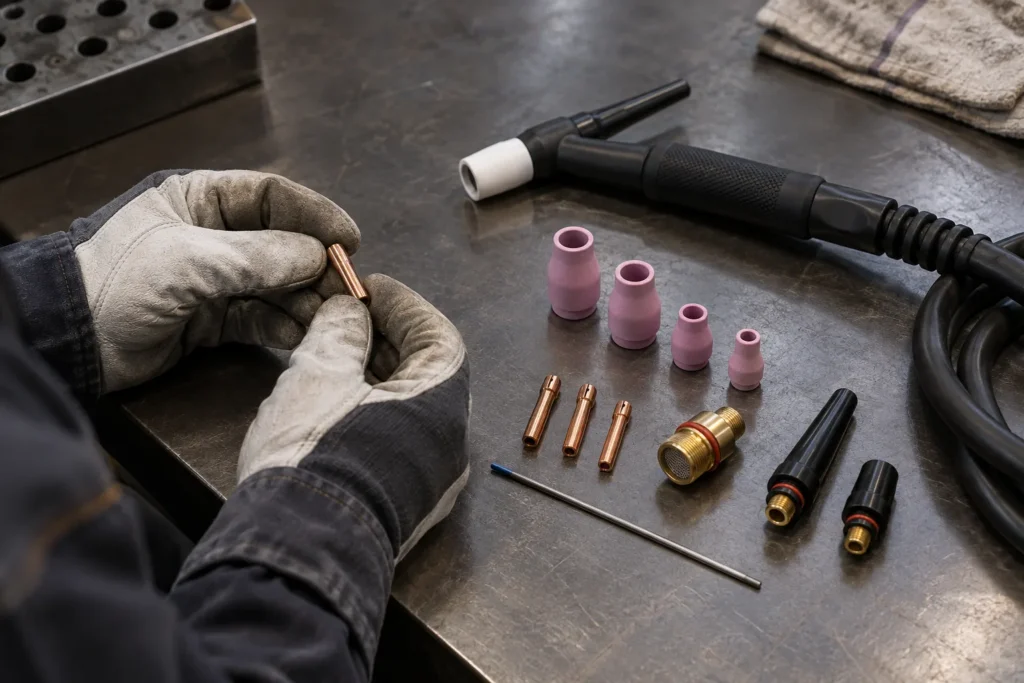
A TIG welding gas lens helps distribute shielding gas around the electrode and weld area. For a fabrication plant, its purchasing value depends on whether the complete front end fits the installed torch, works on the actual joint and can be replenished consistently across shifts. A low-cost kit that requires improvised assembly can create a much larger production problem.
This guide helps welding engineers, maintenance teams and industrial buyers define the assembly, compare standard and compact options, plan a controlled trial and prepare a useful quotation request. GWELD buyers can use it alongside the broader TIG shielding-gas guide when specifying an equipment package.
What Does a TIG Welding Gas Lens Do?
Understand the component and its limits
A gas lens is a torch front-end component that uses screens to distribute gas more evenly than a conventional collet-body arrangement. Miller's shielding-gas guidance explains this difference and recommends testing the selected consumables with the application and welding procedure. The benefit depends on the assembled system and operating conditions.
For an equipment buyer, the useful question is what production requirement the proposed change addresses. It may involve better access around a fixture, a repeatable consumable arrangement or a shielding concern that the engineering team wants to investigate. Define that requirement before comparing prices.
Separate performance evidence from sales language
Treat claims about gas savings, electrode extension and reject reduction as items to validate. A lens cannot establish acceptable weld quality simply because it is installed. The purchase specification should connect the proposed assembly to an approved application and a measurable evaluation method.
Record the current configuration before changing it. Photograph the installed head, note the cup and electrode, and retain the existing parts as a comparison set. This gives maintenance and purchasing a clear baseline and prevents the new order from becoming a collection of visually similar accessories with uncertain compatibility.
Verify Torch Fit Before Ordering a Gas Lens Kit
Identify the complete front-end assembly
Start with the torch manufacturer's name, exact model and the current front-end drawing. Record the electrode diameter, installed collet, body, cup, insulating components and back cap. A general description such as a 17-style torch helps organize the inquiry, but the actual model and specified parts govern approval.
Ask the supplier to return a complete matched list rather than only a lens-body price. Include the required insulator and cup system, packaging quantities and any approved alternatives. Where several torch models operate in one plant, separate them in the request so a quotation cannot silently assume that every head uses the same parts.
Resolve differences before the trial
An unexplained adapter, changed insulator or different cup interface is a procurement exception. Obtain the relevant drawing and have maintenance review it before assembly. The broader TIG torch parts identification guide supports the initial parts inventory.
- Attach clear photographs of the installed head and markings.
- List electrode diameters by work cell.
- State whether the request is for a complete conversion kit or replacement parts.
- Request individual reorder references for every approved component.
Keep the supplier's written fit confirmation with the sample record. A successful order should leave another buyer able to repeat the same configuration without relying on the original technician's memory.
Compare Standard, Stubby and Large-Cup Options
Choose around the joint and fixture
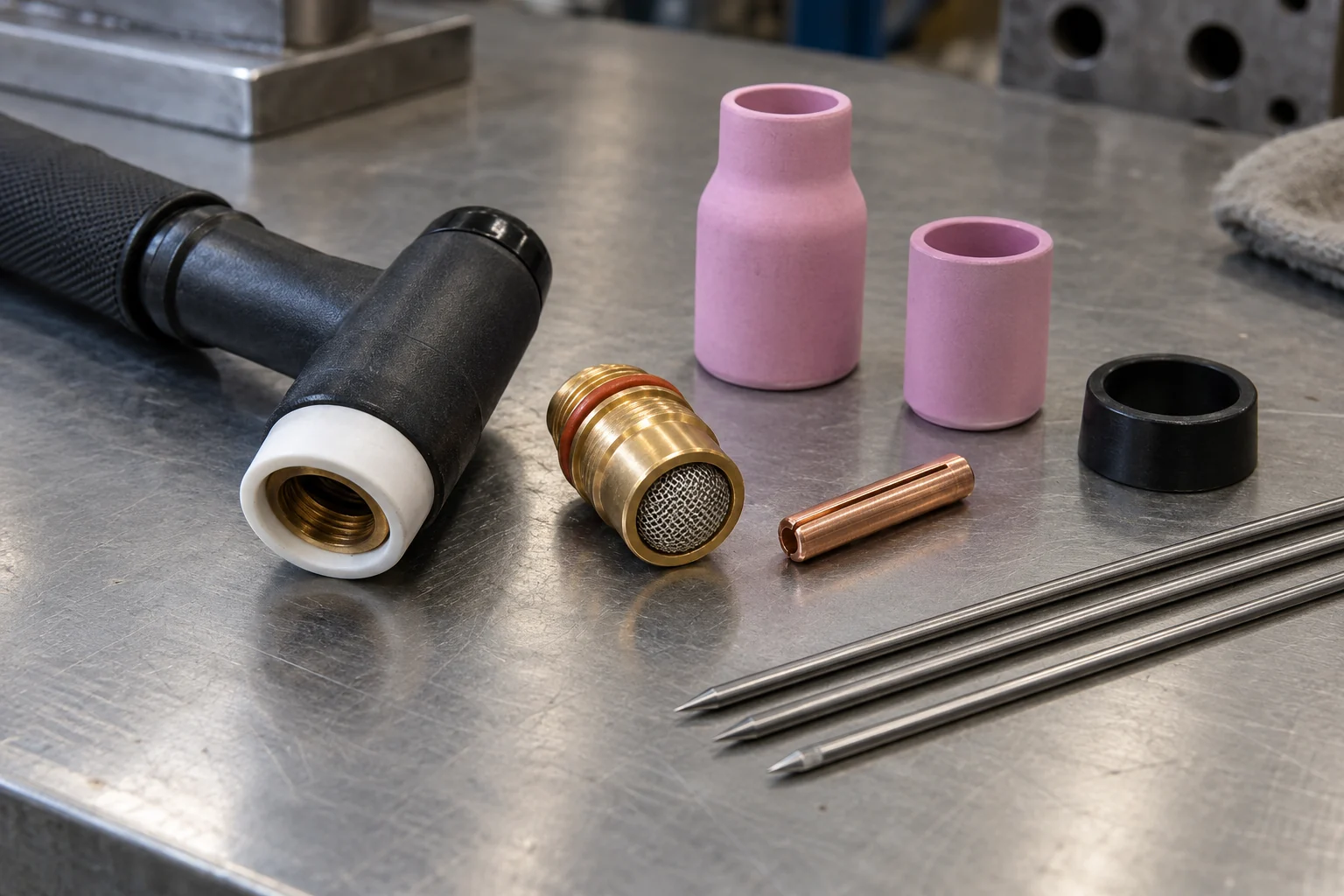
A TIG welding gas lens kit can describe several front-end arrangements. Standard, compact and larger-cup versions should be compared by the complete assembly and the space available at the weld. A compact setup may help in a restricted fixture, while a wider cup may conflict with nearby surfaces. Obtain actual assembly dimensions before choosing either.
CK Worldwide's stubby gas lens accessory kit illustrates a manufacturer-defined configuration for a specified torch series. That catalog example does not establish interchangeability with a GWELD torch or authorize copying its part numbers into another supplier's order.
| Arrangement | Procurement question | Trial evidence |
|---|---|---|
| Standard gas lens | Does the full stack fit the installed head? | Approved assembly list and representative weld |
| Stubby or compact setup | Does the shorter assembly improve real fixture access? | Clearance check at all weld positions |
| Larger-cup setup | Is its size practical for the part and fixture? | Access, handling and process review |
| Existing collet body | Does the current arrangement already meet the requirement? | Baseline inspection and operating record |
Limit the number of approved variants
Select the smallest set of configurations that supports the plant's actual work. Buying every available cup style increases stores complexity without proving production value. Identify one owner for approving additions and document which work cells may use each arrangement.
Keep Cup and Tungsten Requirements Together
Define the combination, not a cup number alone
Treat the TIG gas lens cup, lens body, collet, electrode and insulating parts as one controlled configuration. Record the cup designation as well as the manufacturer's part number. A familiar number or similar color is insufficient for approving a replacement from another product line.
The application sheet should also identify electrode classification and diameter, approved preparation and the setup used during evaluation. Our TIG tungsten selection and preparation guide provides a separate purchasing reference. Keep electrode purchasing and front-end purchasing connected through the work-cell specification.
Document access with the actual part
Photographs from one easy-to-reach joint can hide clearance problems elsewhere. Check the assembly around the entire production part, including corners, position changes and the operator's normal approach. Record the evaluated setup so the next shift can reproduce the same arrangement.
For automated or fixture-guided work, include the tool path and nearby hardware in the review. An accessory change can alter the space required by the torch even when its electrical connections remain unchanged. The responsible engineer should determine whether the change needs a procedure or program review before releasing it for production.
Establish and Record the Gas-Flow Setup
Use the approved process as the starting point
The TIG welding gas flow rate belongs with the gas type, cup arrangement, joint and operating conditions. Miller notes that excessive flow can increase turbulence and inadequate flow can leave the weld insufficiently protected. Increasing the indicated setting alone is therefore an unreliable way to judge a lens.
For the purchasing trial, have the responsible technician record the approved settings and how flow was checked. Include the measurement location, meter identification and units. A cylinder-side indication and a check near the torch describe different observation points. State what was measured rather than treating unlike readings as equivalent.
Make the record usable across shifts
- Identify the gas supply and approved gas specification.
- Record the meter, units and measurement method.
- Note the installed cup, electrode and torch arrangement.
- Record the evaluated preflow and postflow settings.
- Describe the work location and ventilation arrangement.
Include the measurement method in the training note and replenishment specification. Where the trial involves a different meter or accessory package, compare the setup with the existing one under the same agreed conditions. The team can then investigate a discrepancy before purchasing commits to a plant-wide replacement.
Run a Controlled Sample-Weld Acceptance Trial
Define the decision before testing
Prepare a short trial plan agreed by engineering, quality and procurement. Identify the production requirement, sample part, existing setup, proposed assembly and inspection criteria. State who can approve the result. A visually attractive demonstration on an unrelated coupon does not answer whether the kit suits the factory's product.
Use representative joint access and production handling. Keep an assembly record and note deliberate changes so the team can interpret the observations. If several settings and consumables change together, document that limitation rather than assigning the result to the lens alone.
| Trial item | Record | Acceptance owner |
|---|---|---|
| Mechanical fit | Part references, drawing and assembly check | Maintenance or engineering |
| Production access | Fixture positions and handling observations | Production engineering |
| Process setup | Approved settings and measurement method | Welding engineer |
| Weld inspection | Results against project criteria | Quality team |
| Reorder readiness | Approved list, quantities and supplier confirmation | Procurement |
Retain both the result and the conditions
Keep photographs, sample identification and inspection reports with the decision. Record any restrictions, such as approval for one torch model or one fixture only. Release the kit against that scope and define what additional work requires another review. This prevents a limited successful trial from becoming an unsupported universal approval.
Investigate Shielding Problems Without Guesswork
Start with the change history
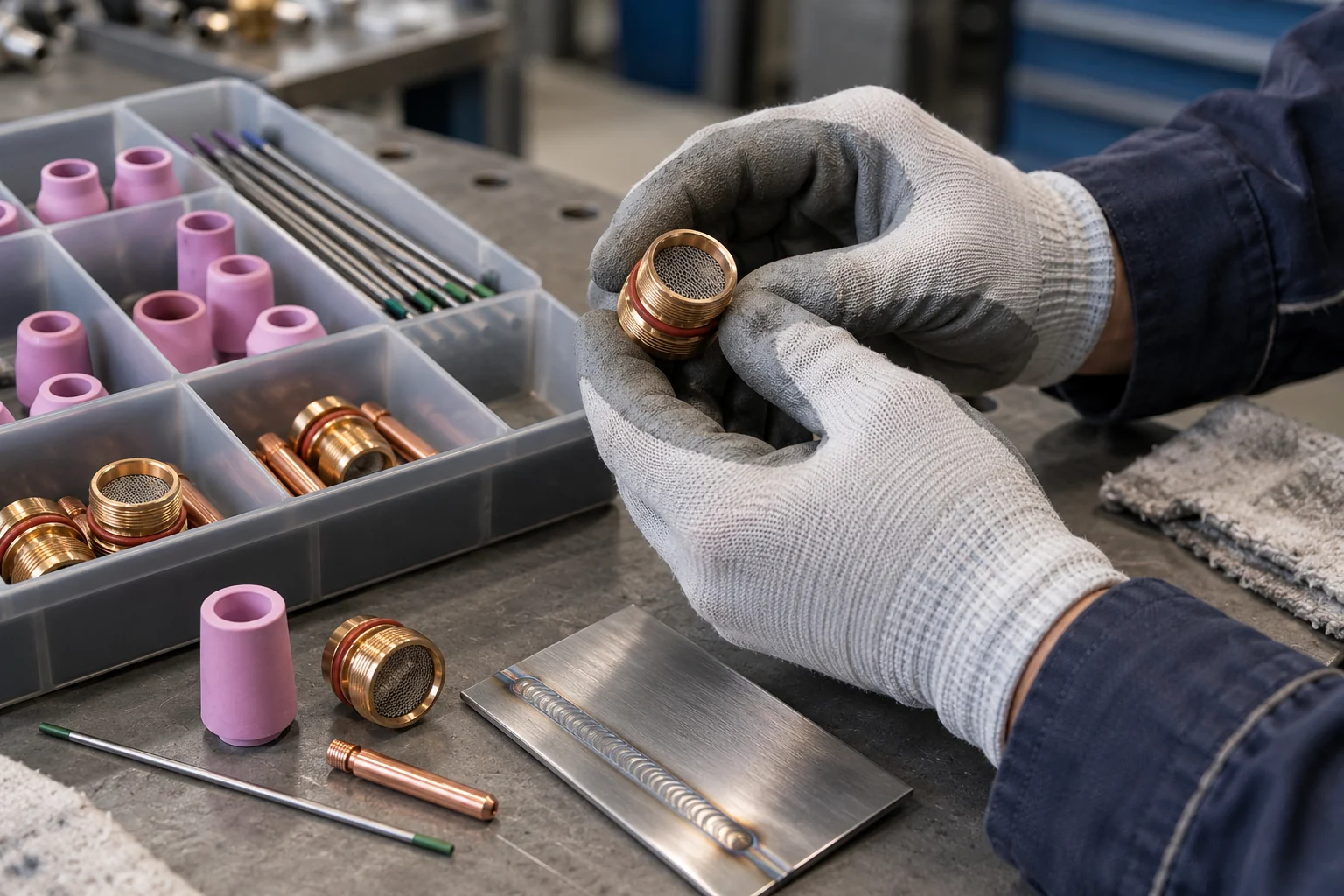
When a new assembly coincides with a welding problem, record what changed before placing another order. Compare the approved part list with the installed parts, check the documented setup and follow the site's quality procedure for affected work. A rushed replacement can hide the information needed to identify the cause.
Use a simple investigation log: observation, work cell, installed configuration, recent change, inspection result and next controlled check. Assign one person to maintain it. This helps purchasing distinguish a damaged consumable from a configuration error or a wider process issue.
Separate supply feedback from process approval
Provide the supplier with the relevant photographs, component identification and observations. Request a drawing or replacement recommendation where appropriate. Keep the decision on weld acceptance with the responsible quality and engineering personnel, using the project's criteria.
If the investigation finds a recurring issue with a particular incoming lot, quarantine the affected stock according to the plant's procedure and record its supplier reference. If the installed configuration differs from the approved one, correct the stores and issue instructions as well as the individual torch. Procurement can then act on a defined problem rather than repeatedly buying a different kit in search of an unexplained improvement.
Plan Inspection, Maintenance and Replacement Parts
Give maintenance a clear reference
Use the component manufacturer's instructions to define inspection and replacement tasks. Keep the approved assembly drawing available at the work cell and stores counter. A technician should be able to identify the specified part without comparing it with an unmarked item from another station.
Record which components are replaced individually and which are supplied as a set. Ask the supplier to identify any restrictions on disassembly, cleaning or replacement. Avoid adding a workshop repair method to the maintenance instruction unless the responsible technical team has approved it.
Connect replacements with their work cells
Track replacement frequency by approved configuration and application. A change in consumption deserves review, but it does not by itself prove poor product quality. Record shifts, production mix and the reason for replacement so the team can interpret the trend.
Build the spare list from actual installed combinations. Include cups, matched collets, insulating parts and the selected lens bodies as distinct reorder items. Define a replenishment quantity and an escalation route when the approved part is unavailable. This keeps an urgent purchasing decision from introducing an undocumented substitution that later shifts assume is standard.
Standardize Gas Lens Kits Across a Production Fleet
Create one approved configuration register
For multiple welding bays, maintain a register connecting each torch model and electrode diameter with its approved front-end parts. Give each combination a clear internal reference. Link the supplier's individual part numbers to that reference so a kit purchase and a single-component reorder produce the same setup.
Label storage bins by the approved reference and keep visibly similar variants separate. Add photographs where they help identification, but do not make a photograph the only approval record. Retain the drawing, supplier confirmation and trial scope in the same register.
Control rollout and alternatives
Start with the work cells covered by the trial. Check that maintenance, stores and supervisors have the same instruction before expanding to other applications. Record the date of the change so later production observations can be connected to the installed configuration.
For an alternative supplier, request a proposed equivalence list and identify the checks needed before approval. Purchasing can compare lead time and price while engineering controls fit and application suitability. A supplier's statement that a part is equivalent should start the review, rather than automatically update every stores record and work-cell instruction.
Compare Total Cost Rather Than Kit Price Alone
Include the cost of a usable configuration
A meaningful TIG gas lens vs collet body purchasing comparison includes the full accessory package, installation time, replenishment and the production requirement. Compare quotations on the same included parts and quantities. A low lens-body price can become a higher package cost if cups and insulators must be purchased separately.
Use the plant's actual records for any cost calculation. Include purchase cost, shipping, trial labor, replacements and relevant downtime. If gas consumption is being evaluated, define the measured period and production output so different shifts or part mixes do not create a misleading comparison.
State what the trial did not establish
A short evaluation may establish fit and handling without establishing long-term replacement cost. Label those findings separately. Procurement can request a limited initial order and review the operating record before committing to a wider stock program.
Do not turn a manufacturer's advertised percentage into a GWELD guarantee. Use demonstrated results under recorded conditions when negotiating the package and keep uncertain estimates visible in the purchasing review. The best decision is the configuration that meets the application requirement and can be supported predictably at the required production scale.
Prepare a GWELD Equipment and Consumables RFQ
Send the details needed for a matched proposal
When discussing a TIG welding gas lens kit with GWELD, include the installed torch model, clear front-end photographs, electrode diameters, production application and quantities. Ask the team to confirm availability and exact fit in writing. Do not assume that every accessory mentioned in a technical guide is included with a machine.
- Application, material and typical joint access.
- Current torch and front-end identification.
- Proposed kit style and the requirement it should address.
- Required sample quantity and trial scope.
- Monthly replacement demand and delivery destination.
- Required drawings, part references and service support.
Connect consumables with the equipment package
For a new installation, review the GWELD equipment and accessories catalog and ask for an itemized scope. The power source, torch, gas equipment and service spares should each have a defined place in the quotation.
Discuss the production environment through the industrial welding solutions relevant to your operation. A concise application brief helps the team identify the right questions before recommending a configuration, preparing samples or quoting a recurring supply program.
Related Products

TIG Welding Torch WP-17 Series
High-quality TIG welding torch with flexible cable and ergonomic handle design for professional welding applications.
- V SERIES uses stronger and more durable material, increasing the service life of the welder.
- Can weld stainless steel, copper, carbon steel, alloy steel, cast iron, and more.
- Lightweight and portable, adaptable to various environments.
Ceramic Nozzle Set for TIG Torch
High-temperature resistant ceramic nozzles in multiple sizes for various welding applications and gas coverage.
- V SERIES uses stronger and more durable material, increasing the service life of the welder.
- Can weld stainless steel, copper, carbon steel, alloy steel, cast iron, and more.
- Lightweight and portable, adaptable to various environments.
Welding Gas Flow Meter Regulator
Dual-stage gas flow meter regulator with accurate flow control for Argon and CO2 shielding gas applications.
- V SERIES uses stronger and more durable material, increasing the service life of the welder.
- Can weld stainless steel, copper, carbon steel, alloy steel, cast iron, and more.
- Lightweight and portable, adaptable to various environments.
Related Solutions

General Fabrication
The ultimate TIG welder solution for diverse fabrication needs. Built with solid materials and thoughtful R&D, our machines offer the precise control required for stainless steel and the reliable power for carbon steel. Experience professional performance in a balanced design engineered for the versatile fabricator.

Heavy Fabrication
The ultimate TIG welder solution for heavy-duty industrial demands. Built with solid materials and thoughtful R&D, our machines offer the precise control required for high-integrity stainless steel joins and the reliable power needed for deep penetration in thick carbon steel. Experience professional performance in a balanced design engineered for the most demanding fabrication environments.

Maintenance & Repair
The ultimate TIG welder solution for unpredictable repair demands. Built with solid materials and thoughtful R&D, our machines provide the precise arc control needed for delicate stainless repairs and the reliable power for rugged on-site fixes. Experience professional performance in a balanced design that is compact, portable, and engineered to keep your operations ready to go—no matter the location.
Frequently Asked Questions
Conclusion
Specify a TIG welding gas lens as a complete, documented front-end configuration. Confirm torch fit, evaluate the actual joint, retain the approved setup and give stores clear reorder references. This turns a consumables purchase into a repeatable production decision.
For a new cell or fleet replenishment program, send your torch model, application, electrode diameters and required quantities to the GWELD technical and quotation team. Request a matched parts list and sample plan before approving the final order.